Resale Residential Shortages Observed in the Denver Metro Market

“It’s a buyer’s market, There’s over supply, Prices are still falling and Shadow inventory will drive prices even lower.”  You’ve heard and read these headlines over the last few months, but that’s why I’m here for you.  You are going to hear it here first.  THIS MARKET HAS CHANGED.  It has changed dramatically.

Market Trend 3 Car Garage Properties

When you open this graphic two things become apparent:

  • If you want a home with a 3 car garage, up to $300K you have very few choices, particularly in spherically close neighborhoods.
  • If you want a home with a 3 car garage, up to $300K you have numerous choices if you are willing to buy in spherically distant neighborhoods.
Posted in Uncategorized | Leave a comment

Super Joe Hubert Is Back with His Denver Market Update March, 2011

Combined DTC MLS Areas

  • As a quick recap, February, 2011 combined MLS Residential Statistics had the following changes compared to February of 2010.
  • Decrease in the Number of Closed Sales to 1,770 (down 7.5%)
  • Average Days on Market increased to 123 days
  • Number of Active Listings decreased 4.7% to 13,393
  • Absorption Rate increased to 7.7 months (up 13.8%)
  • Average Sold Price decreased slightly ( 1.6 % from $269,688 to $265,277)

For more details on the combined MLS Residential Statistics, select the first link below titled “Total MLS” or feel free to contact me if you have any questions.

Joe Hubert

Total MLS
All Metrolist Areas as one download
Aurora North (AUN)
Aurora South ( AUS)
Brighton, Fort Lupton (BFL)
Broomfield (BRM)
Douglas County West (DCW)
Douglas Elbert Parker (DEP)
Douglas Highlands Ranch Lone Tree (DHL)
Denver Northeast (DNE)
Denver Northwest (DNW)
Denver Southeast (DSE)
Denver Southwest (DSW)
Downtown Denver (DTD)
East Suburban North (ESN)
East Suburban South (ESS)
Jefferson County Central (JFC)
Jefferson County North (JFN)
Jefferson County South (JFS)
Jefferson County West (JFW)
Jefferson County Northcentral (JNC)
Jefferson County Southcentral (JSC)
Lafayette (LAF)
Mountain Clear Creek (MCC)
Mountain Conifer Pine (MCP)
Mountain Evergreen North (MEN)
Mountain Evergreen South (MES)
Mountain Gilpin County (MGC)
Mountain Jefferson County (MJC)
Mountain Jefferson North (MJN)
Mountain Jefferson South (MJS)
Mountain Park County (MPC)
Mountain Park East (MPE)
North Northeast Suburban (NNE)
North Northwest Suburban (NNW)
North Suburban Central (NSC)
North Suburban East (NSE)
North Suburban West (NSW)
South Suburban Central (SSC)
South Suburban East (SSE)
Superior (SUP)

Posted in Uncategorized | Leave a comment

Kentwood Search Engine Optimization Results First Quarter 2011

Kentwood Search Engine Optimization Results First Quarter 2011

Kentwood Search Engine Optimization Results First Quarter 2011

Kentwood Search Engine Optimization Results First Quarter 2011

Posted in 2010 Mid Year Denver Market Watch, Buying or Selling Real Estate, Centennial, Cherry Hills Village, Colorado, Denver, Denver Housing, Denver Residential Real Estate, Greenwood Village | Tagged | Leave a comment

Kentwood Real Estate forms Strategic Partnership with LendingTree.com and RealEstate.com

We Are Denver Real Estate

We Are Denver Real Estate

April 5, 2011

FOR IMMEDIATE RELEASE

(For more information contact Douglas E. Lierle at lierlepr@comcast.net)

Colorado’s Premier Real Estate Company Enjoys Approved Brokerage

Status by  Lending Tree, LLC and Company’s Leading Websites

DENVER – Kentwood Real Estate, Colorado’s Premier Real Estate Company, has inked a strategic partnership with Lending Tree, LLC, owner and operator of LendingTree.com and RealEstate.com, two of the nation’s leading real estate websites.  Kentwood Real Estate now enjoys approved brokerage status by Lending Tree.  Leads generated through the two leading websites will be forwarded directly to Kentwood Real Estate’s relocation professionals who will respond with appropriate assistance.


“We are extremely pleased with our new partnership with Lending Tree,” said Pamela Darby, Director of Relocation for Kentwood Real Estate.  “This is a tremendous opportunity and we are thrilled to be working in conjunction with these two outstanding websites that compliment Kentwood’s leading Internet site at DenverRealEstate.com.  The benefits and advantages for those seeking a home in the Denver area are numerous, and we look forward to serving clients who are referred to Kentwood Real Estate when seeking more information on metro Denver properties.  Our relocation department offers award-winning services and we bring years of experience to this vital segment of the real estate business.”


The partnership with Lending Tree is a continuation of Kentwood Real Estate’s commitment to form strategic marketing relationships with leading websites and to acquire premier Internet domain names.  Kentwood recently announced a partnership with Denver.com, Denver’s leading intuitively-branded home on the Internet, and the acquisition of the DenverHomes.com domain name.


RealEstate.com gives consumers a better way to buy and sell homes through a comprehensive suite of real estate services, tools and helpful advice.  The site provides access to nearly three million homes for sale, 97 million home values and a unique deep-dive view into more than 22,000 cities reaching every metropolitan area in the U.S.  The company also operates five distinct business lines, including an Internet-enabled real estate brokerage that operates in 20 markets with more than 1,300 agents, and a Broker Network, a strategic lead-generation program for real estate brokers that provides them with incremental, targeted, and high-quality leads.


LendingTree.com is a free, no-obligation service that empowers people to take control of their financial life.  The site offers interactive tools, personalized advice and comprehensive resources that people need to successfully manage their finances.  For those looking for a loan, Lending Tree can connect them with multiple lenders who will compete for their business and provide customized loan offers.  The company also has a powerful suite of tools and personalized advice to help people budget their money, get out of debt, and boost savings.


For more information on relocation services from Kentwood Real Estate, contact Darby at 303-773-3399 or via email at pam@denverrealestate.com.


Kentwood Real Estate is dedicated to its legacy of being “Colorado’s Premier Real Estate Company” through the highest producing, most knowledgeable, caring and experienced sales team in the country, offering the highest quality customer service experience.  Kentwood Real Estate is an innovator known for unparalleled marketing strategies and superior Internet technology that places its clients in the best possible position.


Kentwood Real Estate is comprised of The Kentwood Company in the Denver Tech Center, Kentwood Company at Cherry Creek, and Kentwood City Properties in downtown Denver.  For more information, visit Kentwood Real Estate online at www.DenverRealEstate.com.


# # #


Posted in 2010 Mid Year Denver Market Watch, Buying or Selling Real Estate, Centennial, Cherry Hills Village, Colorado, Denver, Denver Housing, Denver Residential Real Estate, Greenwood Village | Tagged | Leave a comment

Highest Priced Residential Sales in Denver Metro for 1st Quarter 2011

Denver Metro’s Highest Residential Sales for 1st Quarter 2011
Denver had 2 sales in the first quarter of 2011 over $4,000,000.  Boulder vs. Cherry Hills 

Denver Metro's Highest Residential Sales for 1st Quarter 2011

Denver Metro's Highest Residential Sales for 1st Quarter 2011

Village were the venues.  Click on the link above to see more.  Look inside the metro area’s brightest and best.

Posted in 2010 Mid Year Denver Market Watch, Buying or Selling Real Estate, Centennial, Cherry Hills Village, Denver, Denver Housing, Denver Residential Real Estate, Greenwood Village | Tagged | Leave a comment

Planting Trees Can Save Energy and Grow Value

Colonade of Trees

Colonade of Trees

For 2011, let’s plant a tree to add value to your home and even have a positive impact on your energy bill. Property shading and screening can reap homeowners long term value rewards by improving aesthetics with the right tree in the right spot.  Often we overlook the advantages shading and screening can do for our energy use.  Read on and learn, and this year do it right.  There is a lot you can do around your property, but even more you can do in your own community.  Here’s a list to get you started.

  • Caring for the trees in your yard
  • Supporting tree-planting activities in your community
  • Donating to organizations, such as The Nature Conservancy, which works to preserve the world’s trees and forests, and American Forests, which offers a unique way to take action. First, use its online Climate Change Calculator to determine your carbon footprint. Then, make up for your emissions by donating to a forest restoration project.

Why should you care about trees? Bankable benefits

The most tangible bang from your bark comes from energy savings. Three properly placed trees could save you between $100 and $250 a year in energy costs, according to the U.S. Department of Energy. Trees save energy two main ways. Their shade cuts cooling costs in the summer. In winter, they serve as windbreak and help hold down heating costs.

The National Tree Calculator estimates that a 12-inch elm in an Omaha yard can save $32.43 a year on your energy bills; the same tree in Atlanta would save you $11.89 annually. The calculator also breaks down other dollars and cents benefits of your tree, like decreasing storm water runoff, removing carbon dioxide from the air, and increasing property values.

In our elm example, the 12-inch tree adds $40.23 to the Omaha home’s value and a $57.33 to the one in Atlanta. And as trees grow larger, they can add even more value.

A 2002 study by the USDA Forest Service pegs the value a single tree adds to a property of about $630. Of course, tree value depends on size, species, location, and condition.

Adds Frank Lucco, a real estate appraiser with IRR-Residential in Houston, “On a $100,000 home [in my market], as much as $10,000 of its value could be associated with mature trees.”

That’s peanuts compared with the role trees play as the lungs of the planet. A report by theTrust for Public Land estimated that one mature tree takes 48 pounds of carbon out of the atmosphere each year and returns enough oxygen for two human beings.

Plant your tree in the right spot

To get the full benefits from your trees, choose the right one and put it in the right location. Planting a deciduous tree on the west side of a house provides cooling shade in the summer. In winter, after it loses its leaves, the same tree lets in sunlight that cuts heating and lighting bills. On the other hand, an evergreen on the west side blocks sun all year long, making a home colder and darker in winter. Rather plant evergreens, a great choice for blocking icy winter winds, on the north side of your home.

If you’re planting a new tree, think about its fully grown size and shape before you dig. Branches from a tree located below power lines can cause outages as it grows. Roots from a tree located too close to a home can damage the foundation or block sewer lines. The wrong tree in the wrong place could actually lower your home’s appraised value if it’s deemed hazardous, says Frank Lucco, a real estate appraiser with IRR-Residential in Houston.

Tree costs

Expect to pay $50 to $100 for a 6- to 7-foot deciduous tree, such as a katsura or evergreen. The same tree at 15 feet will cost $100 to $200, according to Brad Swank of Molbak’s Nursery in Woodinville, Wash. The Arbor Day Foundation sells saplings for as little as $8-$15, or less if you’re a member.

Since trees cost money, be cautious about any home construction work. “Tree failure can happen seven to 10 years after construction, primarily because the root system fails when the soil is compacted,” says Thomas Hanson, a member of the American Society of Consulting Arborists from Kirkland, Wash. Also watch for diseases or pests that can threaten trees in your yard and community.

Become a tree advocate

Ensuring that your community has lots of healthy trees doesn’t have to be more complicated than a trip to the nursery and a hole in your backyard. Dig it twice as wide as deep. Let kids push in the dirt and help water weekly until the tree is two years old. TheArbor Day Foundation will tell you how to select the right tree for your needs and climate, where to plant it, and how to maintain it.

The foundation also is a great place to look for community and educational programs.

  • Its Tree City USA initiative provides expert advice and national recognition to cities and towns that want to establish tree-management plans.
  • Its Arbor Day Poster Contest for fifth-graders gives teachers a fun way to help students learn the importance of trees.

Considering everything trees do for you, it’s the least you can do for them and future generations.

By: Brad Broberg

Published: September 12, 2009

Brad Broberg is a freelance writer from Federal Way, Wash. A former newspaper reporter and editor, he writes about business, health care, and real estate for REALTOR Magazine, the Puget Sound Business Journal, and Seattle Children’s Hospital, among others. He’s lived in the same home for 22 years—a home he shares with seven towering Douglas firs.


Posted in 2010 Mid Year Denver Market Watch, Buying or Selling Real Estate, Centennial, Cherry Hills Village, Colorado, Denver, Denver Housing, Denver Residential Real Estate, Greenwood Village | Tagged , | Leave a comment

This Year Develop a Landscape Plan to Fit Your Budget

Budget Your Garden Dollars

Budget Your Garden Dollars

The success of any landscaping project depends on having a plan and sticking to it.  This year, front end time this spring will repay you with generous dividends in the fall.  Make your harvest profitable.

First, consult a pro

To figure out how to allocate your landscape dollars, start by picking the brain of a pro. Even if you have a naturally green thumb, a trained professional can save you from wasting money on wrongheaded ideas and open your eyes to possibilities you haven’t considered. There are various types of landscape pros, and their expertise is priced accordingly.

If your yard has major issues or you have grand ambitions, consider hiring a certified landscape architect to design a comprehensive plan that includes such things as irrigation, lighting, architectural features, soil conditioning, and, of course, the growing stuff. A verbal consultation costs about $100-$150; a detailed plan can run from $300 to $2,500. TheAmerican Society of Landscape Architects offers a state-by-state “firm finder” on its website.

Landscape designers typically charge less than degreed landscape architects and are a good choice for simpler projects that don’t require construction. Horticulturists specialize in plants, not necessarily design. Then there are landscape contractors, the design-build firms of yard work. Start by asking friends whose gardens you admire for recommendations. Your local home and garden center is another good source for contacts.

Set your priorities

Before you get any dirt under your nails—or hire someone to get dirty—you need to make two lists: a) what you want and b) what your property needs. These aren’t necessarily mutually exclusive, but the exercise is important for setting priorities. It would be folly to spend big bucks on an outdoor kitchen before resolving potentially disastrous issues such as a diseased tree or drainage problems.

The first question that a professional will likely ask is: What do you see yourself doing in your yard? Hosting Sunday barbecues? Doing the crossword puzzle in a hammock? Swimming laps? Growing vegetables? Clip pictures of outdoor spaces you like and don’t like to clarify the feeling you’re trying to achieve.

Remember that part of your landscape budget will go toward the “b” list. Those are things that may not lend themselves to sexy magazine spreads but can protect your property value—not to mention enhance your quality of life—by lowering water bills, reducing the need to mow or rake, or blocking the view of your neighbor who hot-tubs in the buff. We’re talking about practical considerations such as irrigation, fencing, lighting, equipment storage, privacy, and security.

Create a “floor plan” to target costs

To ballpark costs for materials and labor, think in terms of square footage, which is how landscapers charge. According to Costhelper.com, hiring someone to create a “naturalistic garden” averages $11 a square foot; the cost can double for a formal garden with walls and water features. And don’t forget to factor in long-term maintenance such as mowing, mulching, and pruning. (Sweat equity, anyone?)

If you’re designing your own plan, start by measuring your property or getting a plat survey from the county. You might even be able to find a topographical map indicating features like slopes and swales. You can sketch the basic layout to scale using old-fashioned graph paper or landscape design software. Prices have come down considerably on the latter, but quality varies widely, so check online reviews before purchasing. A free option: Google’s Sketchup, with cool apps for trees, pavers, shrubs, outbuildings, and the like.

Once you have the parameters, create a floor plan, marking off different sections just as you would rooms of a house. The front path is the foyer, there might be a “dining room” with a picnic table, a shady “bedroom” for a hammock, a “rec room” with play equipment. Consider the costs for each area of your plan, including materials, equipment, furnishings, greenery, and any specialized labor like irrigation or electricity.

Think long term

If your ambitions exceed your wallet (and whose do not?), go back to your priority list and pick a section or projects to tackle as your budget permits, advises Angela Dye, principal designer/president of A Dye Design, a landscaping firm in Phoenix, Ariz. “What is the absolute most important thing you need to have done?” she asks. “What is bugging you most?”

A carefully conceived plan will keep you on track during this gradual transformation, both in terms of vision and budget. And remember that patience pays off. “Additions or renovations can start losing value once completed,” says Jim Lapides, spokesman for the American Society of Landscape Architects. “A landscape literally grows in value over time.”

By: Laura Fisher Kaiser

Published: September 18, 2009

Laura Fisher Kaiser is a contributing editor to Interior Design magazine and a former editor at This Old House magazine. The secret to her Washington, D.C., garden is blood, sweat, tears, and mosquito repellent.


Posted in 2010 Mid Year Denver Market Watch, Buying or Selling Real Estate, Centennial, Cherry Hills Village, Colorado, Denver, Denver Housing, Denver Residential Real Estate, Greenwood Village | Tagged | Leave a comment

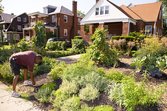
This Year Save Money with Your Edible Garden

Edible Gardens

Edible Gardens

The time spent planning will reap you great rewards.  An edible garden featuring vegetables and herbs can save you a bundle if you keep it simple and raise plants that offer high yields.  Your crop selection is key.

How much can you save?

A backyard edible garden will trim costs from your grocery bill while providing you and your family with the freshest produce possible. According to Bruce Butterfield, research director for the National Gardening Association, a well-maintained garden can produce a half-pound of fresh vegetables for every square foot of garden space. At average market prices, that means a garden returns about $1 per square foot.

Studies conducted by W. Atlee Burpee Co., a mail-order seed company, are even more optimistic. According to Burpee, the average cost-to-benefit ratio of home-grown produce for those who have established gardens is better than 1 to 25. That means every $1 spent on seeds and supplies yields at least $25 worth of vegetables.

Even first-time gardeners will benefit. George Ball, owner of Burpee Co., says that a $10 investment in seeds for tomatoes, beans, bell peppers, lettuce, peas, and carrots, plus $80 for soil, fertilizer, and the cost of building several raised beds, can yield more than $250 worth of veggies and herbs—a substantial portion of the approximately $3,465 the average U.S. family spends on a year’s worth of groceries.

For families that save the harvest, either by freezing, canning, or drying, the cost-benefit ratio climbs even higher. Martha Garway, who tends a 10×10 plot in a Providence, R.I., community garden, freezes much of her summer produce, such as okra, tomatoes, and peppers.

That summer harvest, which costs her $20 for the plot plus the cost of seeds (and she tends to save her own), enables her to “buy only meat and fish through winter—no vegetables,” she says.

Top plants for great returns

For the average gardener in most regions of the country, here are some of the most cost-effective vegetables to grow, and an estimate of what you’ll save over store-bought produce. These figures reflect veggies harvested for fresh eating only; if you freeze or can produce to consume beyond the harvest season, your savings will multiply.

Slicing tomato
Seedling cost: $2.00/plant
Yield: 10-15 pounds tomatoes/plant
Savings: $15-$23/plant

Bell pepper
Seedling cost: $2.00/plant
Yield: 6-8 peppers/plant
Savings: $9-$12/plant

Cucumber
Seed cost: $2.95/packet of 240 seeds
Yield: 10-15 pounds of cucumbers per plant
Savings: $5-$7.50/plant

Bush green beans
Seed cost: $2.95/packet of seeds
Yield: 2.5-3 pounds/5-foot row
Savings: $3.75-$4.50/row

Pole green beans
Seed cost: $2.95/packet of seeds
Yield: 4-5 pounds/5-foot row
Savings: $6-$7.50/row

Leaf lettuce
Seed cost: $2.00/packet of mixed lettuces
Yield: 16 oz. of salad every 3-5 days after leaves mature
Savings: $4 per week

A few vining vegetables, like squash or Malabar spinach, produce abundant yields for the price of a packet of seeds ($2.95). Winter squash types in particular are easy to cure and store, lasting well into spring and offering savings of up to $10-$15 per vine.

Herbs

Herbs offer amazing return. For $1.50, you can buy a 3-inch pot of parsley, chives, oregano, mint, or basil and harvest leaves all season long. With the perennial herbs, like oregano and mint, the harvest continues for years with little maintenance action required. Compare that to “fresh” herbs you’ll get at the grocery for $3 for a 3-ounce packet.

What not to grow

Some vegetables aren’t cost-effective in an edible garden. For instance, you could spend $20 for organic seed potatoes that will yield 15 pounds of spuds from a 20-foot row planting. Compare that with the average price of white potatoes in the supermarket at $1 per pound. Then again, you can’t find Russian Banana fingerlings or Purple Viking potatoes at the grocer, so if you want a specialty spud, grow your own.

Other veggies that don’t pay to grow are ones that are finicky, like celery or asparagus. Both are labor intensive. Onions are relatively cheap to purchase, and it can be difficult to get a large yield of good-size bulbs without a massive garden.

Try growing shallots instead, a gourmet-style onion family member that produces green tops you can harvest like chives and mild flavored bulbs that cost up to $4 a pound at the store.

How big an edible garden?

The median size of an edible garden is about 100 sq. ft., according to the National Gardening Association. For a family of four, a growing space of 200 sq. ft. should keep the family in veggies all summer long. Plan to spend 4 hours a week tending your garden, with 8-12 hours for preparing the planting area in spring, shopping for seeds and seedlings, and sowing crops.

By: Julie Martens

Published: February 2, 2010

Julie Martens is a writer with 21 years’ experience in the field of gardening. Her bylines appear in magazines such as Nature’s Garden, Country Gardens, and Garden Ideas & Outdoor Living. She recently moved into a renovated 1915 home and is busily working on a new garden.


Posted in Buying or Selling Real Estate, Case-Shiller, CASTLE ROCK, Castle Rock and Morrison all enjoy their own little slices of heaven., Centennial, Cherry Hills Village, Colorado, Denver, Denver Housing, Denver Residential Real Estate, Greenwood Village | Tagged | Leave a comment

10 Tips for Saving Money in the Garden This Spring


Planning Your Garden

Planning Your Garden

This year, carefully plan and plot your garden to add value to your home and make the most of your time and money.

So don’t impulsively drive to your garden center. Walk your land, consult an almanac, test the soil, and make a budget. You’ll save your back, your budget, and your home’s curb appeal.

Tip #1: Get to know your land

Before shelling out money for new plants, consider what’s thrived and died in past gardens. Ask, “Is this plant doing its job? Adding beauty? Providing shade? Creating borders?” Give a pink slip to landscaping that’s not pulling its weight.

If you’re a newcomer to gardening or to the area, scout the neighborhood to see which plants look happy and which wither on the vine.

Keep in mind that even plants appropriate for your growing zone might not work in your personal patch. Your particular soil conditions, sunlight patterns, pest populations, and available water will determine what will grow. Your local cooperative extension service can analyze your soil and recommend amendments and suitable plantings.

Tip #2: Become sun savvy

Even experienced gardeners make mistakes. They plant shade-loving plants in full sun or sun-loving plants in partial shade. Before planting anything in your garden, compare the amount of sunlight your landscaping needs for the amount you have.

Evaluating garden sunlight is tricky because daylight is a moving target: Seasons change and plants mature and cast different shadows.

So before plotting plant beds and tree locations, study the movement of the sun throughout the day and, if you have time, throughout the year. Calculate how many hours of sun each garden section receives. Then check planting directions to make sure your greenery will get what it needs.

Tip #3: Become water wise

Over-watering plants can kill your landscaping and budget. To avoid death by water, know how much and when your greens need to drink: Sales tags should have watering directions.

Drip hoses are thrifty ways to water plants, because the water goes directly to roots, drop by drop. Wind drip hoses around tree bases and bottoms of shrubs. Put hoses on automatic timers to avoid over-watering.

If you have an in-ground sprinkler system, install an ET (evapotranspiraton) controller. These systems, which use real-time weather data sent by satellite to control when sprinklers turn on and off, can cut water use by as much as 30%. The controller costs between $300 and $400, depending on system size, but many municipal water agencies offer rebates, particularly in the arid Southwest.

Tip # 4: Mulch much

Spreading a few inches of mulch in landscaping beds protects your plants and shrubs from drying out, and makes beds look tidy and uniform. Mulch also keeps down weeds and moderates soil temperature.

Organic mulches–grass clippings, wood chips, pine needles–eventually decompose and add vital nutrients to your soil and landscaping. Organics also encourage worm growth, nature’s own soil tillers and fertilizers.

Shredded bark mulch from the garden center provides a rich look for your beds, adding curb appeal. It also prevents dirt from splashing on leaves.

Tip #5: Color your garden

Stick to a simple color scheme for flowers and blooming shrubs in your garden. Your landscaping will look more cohesive and professional.

Massing plants of coordinated colors creates a sense of luxury and order. If you like pinks, add lavenders and blue-hued plants. If hot red is your color, mix with yellows and oranges.

Keeping to a single color family in your garden also narrows your focus when roaming plant center aisles. If you are a gardening newbie and can’t tell a tea rose from a trumpet vine, ask the store’s plant expert for help. Most will be glad to exchange their knowledge for a sale.

Also, gardening catalogs and websites often group complementary colors together. Some even provide a complete landscape plan, which you can faithfully recreate.

Tip #6: Avoid invaders

Ivies, grasses, and vines will fill in your garden quickly, and just as quickly take over your landscaping. Once these “invasives” take root, unearthing them is difficult, and in some cases, impossible.

Your garden center doesn’t call these spreaders “invasives.” They are billed as “fast growers” or “aggressives,” but often that’s code for non-native plants that take over the landscape and crowd out locals by stealing nutrients, light, and water.

The U.S. Department of Agriculture maintains a list of invasives that includes various ivies, grasses, weeds, vines, self-seeding varieties of bushes and shrubs, and even seemingly innocuous herbs, like mint. Your county extension service can steer you toward the species best suited to your garden. Warning: If you love growing mint, grow it in a pot on your deck or patio.

Tip #7: Beware of neighbors bearing green gifts


You should love thy neighbor, but don’t ever take cuttings from their gardens unless you know exactly what they are and how they grow. Self-seeding perennials, such as Black-Eyed Susans and coneflowers, will quickly fill bare spots with splashes of color. If you tire of them, just grab a spade and dig them out.

But if a neighbor extends a slender stalk of Rose of Sharon, or other invasive tree species, run away screaming. These trees will spread throughout your yard and grow roots so deep that only a professional–or the better part of your weekend–can dig and pull them out.


Tip #8: Plant shade trees for natural A/C

Shade trees planted on the south and west sides of a house reduce cooling bills–up to 25%–and lower net carbon emissions. So include shade trees in your landscaping plan.

Choose shade trees according to their size at maturity, which could be 20 years away. Dense deciduous trees–maples, poplars, cottonwoods–are good selections because their leaves cool your house in summer, and their bare branches let light in during winter. Plant them close enough to shade your house, but not so close that they will overwhelm the space.

If you want a faster growing shade tree, about 2 feet per year, select a northern red oak, Freeman maple, or tulip tree.

Tip #9: Power down your lawn mower

The Environmental Protection Agency says gas-powered lawn mowers contribute as much as 5% of the nation’s air pollution. Switching to new generation electric and push-reel mowers—which are lighter, quieter, and kinder to your lawn than power mowers—reduces emissions and cuts fuel consumption.

To mow three-quarters of an acre of grass with a power mower requires 1 gallon of gas. As gas prices head to $4 per gallon, you could save $100 a year by switching to a muscle-powered or electric machine. An electric or good push-reel mower costs $150 to $250, so it will quickly pay for itself.

Tip #10: Grade your landscaping

Once a year, walk your property, cast a hard eye on your garden beds and ask, “Is that plant doing its job? Is it growing into its space, or wandering wherever it likes? Are leaves healthy or spotted with mold and pests? Are these greens improving curb appeal or just making my house look overrun?”

If a plant or shrub isn’t working out, it’s compost. If shrubs are growing too close to your foundation–1 foot away is good–transplant or prune them.

Make sure trees are growing no closer to your house than the width of their mature canopies. Otherwise roots can burrow into foundations, and overhanging branches can trap moisture against the roof or siding, leading to rot and insect damage.

Check your flowering plants and shrubs to see if they are indeed flowering. Too few or dull blossoms should rally after a dose of fertilizer or layer of compost. An inexpensive alterative to commercial fertilizers is manure tea. Fill the foot of old pantyhose with a clump of cow or horse dung, tie the hose to the watering can handle, and let the manure steep in water. You can get weeks of nutrition from a little bit of dung.

By: Laura Fisher Kaiser

Published: January 28, 2011

Jeanne Huber is the author of 10 books about home improvement and writes a weekly column about home care for the Washington Post.


Posted in Buying or Selling Real Estate, Centennial, Cherry Hills Village, Colorado, Denver, Denver Housing, Denver Residential Real Estate, Greenwood Village | Tagged | Leave a comment

7 Gardening Mistakes to Avoid This Spring

Sprinkler System

Sprinkler System

Opening day was last week, but even veteran gardeners make rookie mistakes, like giving plants too much water and too little space. Here are common garden blunders. Consider yourself warned.  Make this spring your best year in the garden yet.

It’s easy to misjudge and make a mess out of your landscaping. Here are seven common garden blunders, and how to avoid them.

Mistake #1: Too many changes, too soon

The excitement of buying a new home, plus a stretch of warm spring weather, often creates a passion for yard work. But don’t just do something, stand there! What looks like a spring weed might be a fall-blooming vine; that bare spot in March might reveal tulips in April.

Try this instead: Live with your land for a year. Observe how many hours of sunlight each part of your garden gets. Test the pH of your soil to determine if acid-loving or alkaline-loving plants will be happy in that particular patch of heaven. Observe when your lawngreens up in spring and becomes dormant in late summer.

The money and time you save by watching and waiting will be your own.

Mistake #2: Too much togetherness

Trees and shrubs that look properly spaced when you plant them will crowd each other and compete for water, sun, and nutrients in a few years. If you’re lucky, you can transplant some bushes; if you’re not, you’ll have to throw away starved shrubs.

Try this instead: Before digging, read spacing instructions. Give trees plenty of space–you can always fill in later. Stagger bushes and plants and create two rows, which will create more breathing room. The results will look absurdly sparse at first. But live with it. In a few years, your shrubs will fill empty spaces without suffocating each other.

Mistake #3: Planting without a plan

Planting new garden beds without a long-term landscape plan is like pouring a house foundation without blueprints. Your haste results in a waste of time, money, and muscles.

Try this instead: Draw a simple sketch of your yard–what’s there now and what you might add later, such as patios, outbuildings, and pools. Bone up on the trees and shrubs that grow best in your soil and climate. Go online and click around landscaping sites that help you pick plants and design beds.

Visit your local nursery or home improvement center where design staff can answer questions and make suggestions. Or hire a professional landscape designer to create a starter plan for as little as $250 to $500. Find a professional at the Association of Professional Landscape Designers or the American Society of Landscape Architects.

Mistake #4: Neglecting the root of it all

Even the hardiest plants need a little help putting down roots in new locations. Sprinkling the foliage doesn’t nourish the roots, the plant’s nerve center. You must deliver water to the root ball below the ground, or your plants will be stunted and short-lived.

Try this instead: Place the hose at the base of new bushes, trees, and plants and let the water trickle out for 20 to 30 minutes, twice a week (more during hot spells), for 4 to 12 weeks. Or snake a soaker hose ($20 for 50 feet) through your beds, which will deliver slow and steady water to roots.

Mistake #5: Forgetting the sun

Too many gardeners pick plants based only on looks, not the growing conditions plants require and the conditions that exist. Rookies will plant sun-loving perennials under an old oak tree or sun-shy hostas in the open. They look great for about a week, and then die.

Try this instead: Observing the spot where you’re going to put the plant and estimating the amount of sun it gets over the course of a day during the growing season. To translate that into the language on plant labels, use this key:

Full Sun 6 hours a day or more
Part Sun/Part Shade 3 to 5 hours
Full Shade Less than 3 hours

Mistake #6: Over-watering

An automatic irrigation system is a luxury that keeps your landscape hydrated throughout the growing season with almost no effort. Unfortunately, auto-watering can bring disease, root rot, and a premature death to plants; it also wastes water.

Many gardeners set watering timers for 15 to 20 minutes each morning, which wets the surface but doesn’t soak deeply to nourish roots of large trees and shrubs.

Try this instead: Water for 40 to 60 minutes only two to three times a week. Check with the company that maintains your irrigation system for local recommendations. A deeper soak also helps lawns develop deeper root systems.

Mistake #7: Budget blunders

Your landscaping can fall victim to construction bulldozers that park on lawns and dig too closely to trees and shrubs. New construction also demands rethinking your landscape plan to accommodate additions.

Unfortunately, many home owners don’t include landscaping in their construction budget. They end up with a beautiful new family room, screened porch, or solarium, and a few lonely azaleas planted around the foundation as an afterthought.

Try this instead: Allocate 10% to 20% of your construction budget to the landscape—both hardscaping and plants. If your construction spreadsheet can’t stand another line item, make a plan to landscape–in stages, if necessary–as soon as possible after construction is completed.

By: Oliver Marks

Published: February 10, 2011

Oliver Marks is a former carpenter and newspaper reporter who has been writing about home improvements for 16 years.


Posted in Buying or Selling Real Estate, Centennial, Cherry Hills Village, Colorado, Denver, Denver Housing, Denver Residential Real Estate, Greenwood Village | Tagged | Leave a comment