Steam Shower: Make Your Life a Little Steamy

Master Bath

Master Bath

Install a home steam shower and feel the tension melt away every day.


Bring on the steam

A steam generator heats water over an electrical element, which produces steam that is piped into the shower. The generator, about the size of a microwave oven, can be installed next to the shower or tucked away in a nearby closet, connected with water and electrical lines. Generators generally range from $800 to $1,000.

Make your own steam shower

You can transform your existing shower/tub into a steamy spa, or build a new steam room by framing a shower and installing waterproof drywall or cement backer board and tile. (You will likely need a permit–check your local building codes.)

The key: The shower must be completely sealed and waterproof. That means tiling the entire space, including the ceiling, and installing a tight-fitting glass door. Make sure the space is large enough for a bench to relax upon, ideally 3-by-5 feet; If you are tight on space, try a corner bench. (Cost: $7,000 to $10,000, including the steam generator.)

Fiberglass shower

Install a modular fiberglass, self-contained steam shower. They are cheaper than wood-framed showers, and can be installed in one to five days. The unit comes with a flexible, braided line to hook up to hot and cold water. To run the generator, connect electrical wiring (usually 220 volts). If you’re really handy, install the unit yourself, or hire professionals for $500 to $1000. Units, including steam generators, range $1,000 (3-by-3 feet) to $5,000 (6-by-3 feet unit).

Using the shower

Although steam is a healthful choice for most people, steam showers can adversely affect people with heart disease, high blood pressure, or diabetes; as well as pregnant women, young children, and the frail elderly. Kids five years old and older may take the steam under parental supervision.

Maintaining steam

Hot, damp areas are perfect incubators for mold and mildew. After using your steam shower, open the door to dry out the unit, and run the bathroom fan to suck out the steam. 

Every few months, flush the unit to get rid of calcium deposits. 

By: Caralee Adams

Published: February 3, 2011

Caralee Adams is a veteran journalist. Her work as appeared in national publications, including Better Homes & Gardens, Parents, and The Washington Post.

Posted in 2010 Mid Year Denver Market Watch, Buying or Selling Real Estate, Centennial, Cherry Hills Village, Colorado, Denver, Denver Housing, Denver Residential Real Estate, Greenwood Village | Tagged | 1 Comment

Create A Garden Room: It’s a Natural Choice

Courtyard Garden

Courtyard Garden

Create a garden room to provide space for tools and seeds, and to allow you to commune with nature from inside your home.


Garden room must-haves

Sink: Keep it deep for rinsing slugs off garden vegetables or cleaning muddy trowels. A stand-alone stainless steel sink from a kitchen supply store is a workhorse ($250 to $1400), but a plastic tub ($80) will do, too.
 
Countertops: When you create a garden room, more countertop is better for repotting plants or pressing seeds into soil. Counter space next to the sink makes cleanup easier. Stainless steel is best because it won’t stain and you won’t care about scratches. Cost: $75/sq. ft. If your budget is tight, use an old wood table that a few more scars won’t hurt.

Storage: Throw up some cabinets in your new garden room; you can get deals at Habitat for Humanity ReStore resale outlets ($45 for a single cabinet), rescue school lockers from a yard sale, or stack and anchor inexpensive bins to a wall. A forged iron curtain rod with some large J hooks is a great place to hang baskets for less than $100.

Light: Your seedlings and hanging plants will love natural light. Replace wood doors with a swinging all-glass door. Rip down window treatments to maximize light.

Flooring:
  Choose a surface in your garden room that won’t show dirt and is easy to clean.Vinyl sheets ($8 to $10/sq. yd.), are best. Ceramic tile (typically $1 to $10/sq. ft.) is sturdy and can give a natural feel to your space. To hide dirt, use darker tiles and grout. Also, make sure you periodically reseal grout lines to keep out dirt. 

By: Caralee Adams

Published: February 3, 2011

Caralee Adams, a veteran journalist, has written for Better Homes and Gardens, Parents, Fitness, and The Wall Street Journal.

Posted in 2010 Mid Year Denver Market Watch, Buying or Selling Real Estate, Centennial, Cherry Hills Village, Colorado, Denver, Denver Housing, Denver Residential Real Estate, Greenwood Village | Tagged | Leave a comment

Painting Walls Red: How to Pick It and How to Get Rid of It

Red Walls

Red Walls

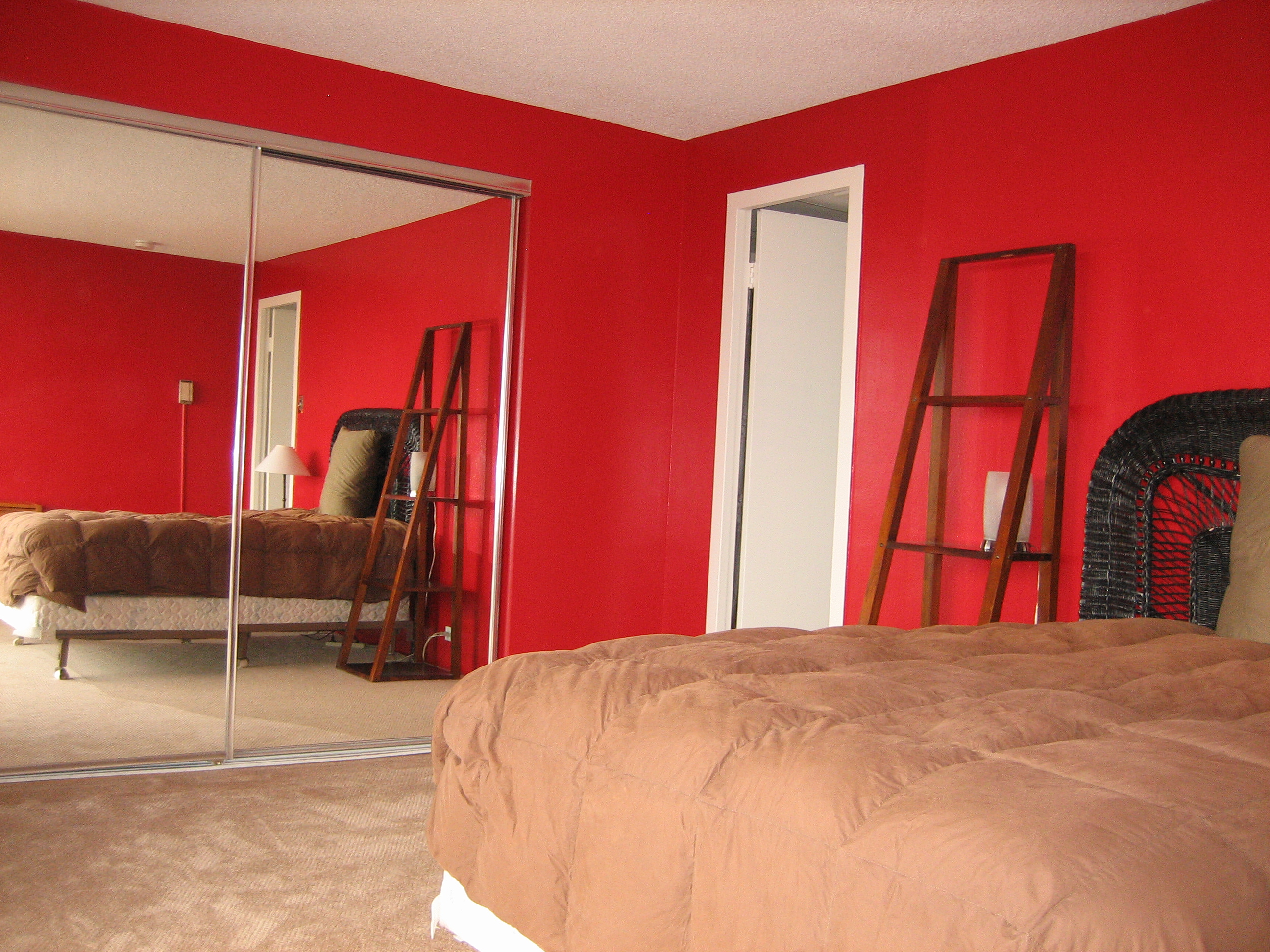
Painting walls red–or any bold color–makes a definite statement, which you may want to take back someday. A tinted primer will cover your mistake.

Seeing red
Painting walls red is less forgiving than, say, painting walls Linen White. Make a mistake, and you’ll feel like you’re dining inside a tomato. Change your mind, and you’ll need at least two new coats of paint to cover your regrets. Here are tips on where and which red to choose.

Painting walls red can make large spaces feel more intimate, and small spaces look more interesting. Splash a little red in a powder room, or on just one wall in a den.
Bluish reds can be festive and a good choice for dining and living rooms.
Orange-hued reds are anxiety-producing colors–popular in casinos–so keep them out of the bedroom.
Paint your selection of a sheet of poster board–not on the walls–and place it in different parts of the room, at different times of the day, and in different sunlight conditions. At night, turn on lamps to see how your red reacts to artificial light.
Choose to re-choose
Red walls don’t play well with new colors: Whites turn pink, yellows become orange, and blues look purplish. You won’t be able to throw up a coat of crème and call it a day.

Here’s how to neutralize red:

Prime walls with water-based sealing primers, such as Benjamin Moore Color Foundations or Behr Premium Plus Interior Enamel Primer.
Tint primer to make it closely match your final color. Or, choose a grey or pink tint to help transition from red to a more neutral color.
Paint two coats of primer and let dry completely. Use fans to speed up the process.
After priming, choose a good quality paint and you’ll likely need only two coats. For a high-quality paint, look for 100% acrylic and stick to national brands.
Apply new color with a 3/8-in nap roller. The shorter the nap, the better the coverage, which is important when covering red colors.
Caralee Adams, a veteran journalist, has written for Better Homes and Gardens, Parents, Fitness, and The Wall Street Journal.

By: Caralee Adams Published: February 3, 2011

Posted in 2010 Mid Year Denver Market Watch, Buying or Selling Real Estate, Centennial, Cherry Hills Village, Colorado, Denver, Denver Housing, Denver Residential Real Estate, Greenwood Village, Luxury Homes | Tagged | Leave a comment

Kentwood Real Estate Recognized by Realtor Magazine

5690 DTC Blvd. #600W

Home of the Finest Realtors

Kentwood Real Estate was recently recognized by Realtor Magazine, the official publication of the National Association of Realtors, as the number one real estate brokerage in the country for the highest closed sales production per Broker Associate on an annual basis!

Pam O’Connor says she’s a strong believer in the power of local branding. Independent brokerages and franchisees with deep roots in their markets have a significant advantage over national companies that don’t have a recognized local brand.

“National brands are less meaningful than they used to be because of the Internet. Consumers may have a harder time, for example, finding a branch in their neighborhood because they have to drill down so far when searching the company Web site,” she says. “What makes a difference is having skin in the game. With local ownership, it’s their money and their deals and these businesses tend to do better.”

Kentwood Significantly Out Performs Local MLS Averages for 2010: Kentwood vs. MLS

Posted in Buying or Selling Real Estate, Centennial, Cherry Hills Village, Colorado, Denver, Denver Housing, Denver Residential Real Estate, Greenwood Village | Tagged | Leave a comment

Does Cost Equal Value in the Mountain States?

Cost vs. Value 2010

Posted in 2010 Mid Year Denver Market Watch, Buying or Selling Real Estate, Centennial, Cherry Hills Village, Colorado, Denver Housing, Denver Residential Real Estate, Greenwood Village | Tagged | Leave a comment

Let’ Beautify Our Homes and Gardens! A Valentine’s Date?

Home and Garden Show

Home and Garden Show

This year’s Colorado Garden & Home Show at the Colorado Convention Center will once again feature gardens with several water features.  Denverites should be very excited about it! New schemes with larger garden space!  Artist R C Anderson’s Garden Kaleidoscope will be featured at Rocky Mountain WaterScape’s garden.  It is a charming piece of art, inviting show visitors to stop and take some time to look at flowers in a new light!  Along with RMW’s water features, there will be blooming plants, both annuals and perennials, for everyone to enjoy!  Kevin Skeens from Collegiate Peak Landscaping will be building the landscaping around RMW’s features and an outdoor kitchen that will make your mouth water!

From all the sights and sounds you will be able to gather creative ideas for your own backyard while strolling through the gardens.  Also, plan on seeing some exciting ideas from the most popular items that RMW’s will be displaying at this year’s show.  RMW will have the Aquascape IonGen, that when installed in your water feature helps to control algae without the use of chemicals.  Along your way, be sure to stop by and pick up a discount coupon for your spring clean out and visit us while you are enjoying the show.  Also, sign up for a free pond clean drawing!

Don’t miss this opportunity to visit the garden, relax with RMW’s water features and of course the kaleidoscope!  The show runs from February 12th – 20th.  The show’s hours are:  Weekdays noon to 8 pm, Saturdays 10 am – 8 pm, and Sundays 10 am – 6 pm.

If you get a chance while you are at the show, don’t miss the chance to stop by and say hi to Mark.

Mark Russo
Rocky Mountain WaterScape
285 Skylane Drive
Erie, CO  80516
(303) 666-5430 (office/fax)
(303) 870-5607 (cell)
www.rmwaterscape.com

Posted in Denver, Denver Residential Real Estate, Home & Garden | Tagged | Leave a comment

Looking to Buy Denver, Colorado Real Estate?

Suburban Denver, Colorado

Suburban Denver, Colorado

Home shoppers making the move to Denver will find properties in every style and price range, including modern downtown lofts and condos, historic Capital Hill Mansions, affordable houses in residential neighborhoods, as well as ultra-luxury custom homes. There are also many historic homes in Denver, in addition to numerous new home neighborhoods. To buy Denver Colorado real estate is both a lifestyle improvement over renting, but also a wise investment. The key is to find the neighborhood that matches your price and lifestyle….this is what Tom Cryer specializes in.  He’s your friend in the home ownership business.

One of the reasons the Denver Metro Area in Colorado remains one of America’s most desirable cities is the amount of protected opens space that surrounds the city and its amazing parks within the city.  Denver, Colorado is truly an outdoor-lover’s paradise. The city is surrounded by thousands of acres of open space and has hundreds of miles of hiking, biking and pedestrian trails that range from easy to very difficult. Rock climbing, mountain biking, golfing, and kayaking are other popular activities in the area. Every three day weekend, Denver welcomes runners from all over the state for everything from the Turkey Trot to the Denver Marathon.

The 16th Street Mall is a ribbon of commerce stretching from Denver’s trendy LoHi to the State Capital.  It is a pedestrian paradise and social hub before during and after sporting events, weekend gatherings and even New Year’s Eve.  The Mall features restaurants, stores, offices and galleries, and three urban universities with more than 30,000 full and part-time students are within walking distance of downtown.

This city has a mild climate and historically has about 300 sunny days a year. For those who care even remotely about fitness, extensive trail systems make it almost impossible to escape staying in shape.  Denver and all parts of Colorado rank at the top of the nation’s fittest environment year after year.

Each Denver neighborhood has its own vibe.  The architecture, lot and home size, access to open space and trail system and their walkability create unique pockets for living.  Luckily, Denver is small enough that a quick bike ride will get you to the trailhead no matter what part of town you choose to call home.  To Buy Denver, Colorado real estate is one of the best investments you can make…both financially and for your lifestyle.  Visit MyTownCryer for more information.

Posted in Buying or Selling Real Estate, Centennial, Cherry Hills Village, Colorado, Denver, Denver Housing, Denver Residential Real Estate, Greenwood Village | Tagged , , , , | Leave a comment

Tax Tips for Homeowners Looking Ahead to 2010 Returns

From energy tax credits to vacation home deductions, check out these tax tips for homeowners looking ahead to 2010 returns.

Claim remaining energy tax credits

It’s time to get cracking if you didn’t exhaust your full allotment of residential energy tax credits during 2009. Although tax credits for big projects like residential wind turbines and solar energy systems have no upper limit and are good through 2016, energy tax credits capped at $1,500 expire at the end of 2010. Eligible capped projects include new windows and doors, insulation, roofing, water heaters, HVAC, and biomass stoves.

Here’s how it works with capped federal credits: You can earn energy tax credits worth 30% of the cost of qualifying improvements, but the total tax credits can’t exceed $1,500 combined for 2009 and 2010. So if you only took, say, $700 worth of capped energy credits on your 2009 tax return, you’re still due for another $800 in credits in 2010. Some projects include the cost of installation–a furnace, for example–while others, such as insulation, are limited to the cost of materials.

Max out tax benefits of a vacation home

Use a vacation home wisely, and it’ll provide a break from taxes as well as the hustle and bustle of everyday life. The rules on tax deductions for vacation homes can get a bit tricky, but understanding and adhering to them can yield many happy tax returns.

If your vacation home is truly a vacation home meant for your personal enjoyment, as opposed to a rental-only income property, you can usually deduct mortgage interest and real estate taxes, just as you would on your main home. You can even rent out the home for up to 14 days during the year without getting taxed on the rental income. Not bad.

Now, let’s say you want to rent out your vacation home for more than 14 days in 2010, but also use it yourself from time to time. To maximize the tax benefits, you need to keep tabs on how many days you use your vacation home. By restricting your annual personal use to fewer than 15 days (or 10% of total rental days, whichever is greater), you can treat your vacation home as a rental-only income property for tax purposes.

Why is that a big deal? In addition to mortgage interest and real estate taxes, rental-only income properties are eligible for a slew of other tax deductions for everything from utilities and condo fees to housecleaning and repairs. Deductions are limited once personal use exceeds 14 days (or 10% of total rental days), so get out your calendar now to strategically plot your vacations.

Take advantage of tax breaks for the military

In salute to members of the armed forces serving overseas who want to purchase a home, the IRS is extending a lucrative tax perk for military personnel. If you spent at least 90 days abroad performing qualified duty between Jan. 1, 2009, and April 30, 2010, you have an extra year to earn a homebuyer tax credit. In addition to uniformed service members, workers in the Foreign Service and in the intelligence community are eligible.

Thanks to this extension of the homebuyer tax credit, qualifying military personnel have until April 30, 2011, to sign a contract on a new home. The deal must close before July 1, 2011. Just like non-military buyers, first-time homebuyers can earn a tax credit worth up to $8,000, and longtime homeowners can earn a credit of up to $6,500. The same income restrictions and $800,000 cap on home prices apply.

Military personnel can also get a break if official duty calls and they’re forced to move for an extended period. Normally, the homebuyer tax credit needs to be repaid if you sell your home within three years, but this requirement is waived for uniformed service members, Foreign Service workers, and intelligence community personnel. The new extended duty posting doesn’t need to be overseas, but it must be at least 50 miles from your principal residence.

Challenge your real estate assessment

You can’t do much about the rate at which your home is taxed, but you can try to do something about how your home is valued for taxation purposes in 2010. The process varies depending where you live, but in general local governments conduct a periodic real estate assessment to determine how much your home is worth. That real estate assessment figure is used to calculate your property tax bill.

You can usually appeal your real estate assessment if you think it’s too high. Contact your local assessor’s office to find out the procedure, and be prepared to do some research. There’s often no charge to request a review of your assessment.

Look for errors. You probably received an assessment letter in the mail, and many local governments provide the information online as well. Make sure the number of bedrooms and bathrooms is accurate, and the lot size is correct. Also check the assessed value of comparable homes in your area. If they’re being assessed for less than your home, you might have a case for relief.

Even if your assessment is accurate and comparable homes are being taxed at the same rate, there might be another route to tax savings. Ask your assessor’s office about available property tax exemptions. Local governments often give breaks to seniors, veterans, and the disabled, among others.

This article provides general information about tax laws and consequences, but is not intended to be relied upon by readers as tax or legal advice applicable to particular transactions or circumstances. Consult a tax professional for such advice; tax laws may vary by jurisdiction.

By: Mike DeSenne

Published: February 22, 2010

Mike DeSenne is Online Managing Editor for taxes, finances, and insurance at HouseLogic.com, and the former Executive Editor of SmartMoney.com. He likes to do his taxes by hand, much to the dismay of his accountant.

Posted in TAX | Tagged | Leave a comment

10 Common Errors Home Owners Make When Filing Taxes

Don’t rouse the IRS or pay more taxes than necessary—know the score on each home tax deduction and credit.

Sin #1: Deducting the wrong year for property taxes

You take a tax deduction for property taxes in the year you (or the holder of your escrow account) actually paid them. Some taxing authorities work a year behind—that is, you’re not billed for 2010 property taxes until 2011. But that’s irrelevant to the feds.

Enter on your federal forms whatever amount you actually paid in 2010, no matter what the date is on your tax bill. Dave Hampton, CPA, tax manager at the Cincinnati accounting firm of Burke & Schindler, has seen home owners confuse payments for different years and claim the incorrect amount.

Sin #2: Confusing escrow amount for actual taxes paid

If your lender escrows funds to pay your property taxes, don’t just deduct the amount escrowed, says Bob Meighan, CPA and vice president at TurboTax in San Diego. The regular amount you pay into your escrow account each month to cover property taxes is probably a little more or a little less than your property tax bill. Your lender will adjust the amount every year or so to realign the two.

For example, your tax bill might be $1,200, but your lender may have collected $1,100 or $1,300 in escrow over the year. Deduct only $1,200. Your lender will send you an official statement listing the actual taxes paid. Use that. Don’t just add up 12 months of escrow property tax payments.

Sin #3: Deducting points paid to refinance

Deduct points you paid your lender to secure your mortgage in full for the year you bought your home. However, when you refinance, says Meighan, you must deduct points over the life of your new loan. If you paid $2,000 in points to refinance into a 15-year mortgage, your tax deduction is $133 per year.

Sin #4: Failing to deduct private mortgage insurance

Lenders require home buyers with a downpayment of less than 20% to purchase private mortgage insurance (PMI). Avoid the common mistake of forgetting to deduct your PMI payments. However, note the deduction begins to phase out once your adjusted gross income reaches $100,000 and disappears entirely when your AGI surpasses $109,000.

Sin #5: Misjudging the home office tax deduction

This deduction may not be as good as it seems. It often doesn’t amount to much of a deduction, has to be recaptured if you turn a profit when you sell your home, and can pique the IRS’s interest in your return. Hampton’s advice: Claim it only if it’s worth those drawbacks.

Sin #6: Missing the first-time home buyer tax credit

If you met the midyear 2010 deadlines, don’t forget to take this tax credit into account when filing.

Even if you missed the 2010 deadlines, you still might be in luck: Congress extended the first-time home buyer credit for military families and other government workers on assignment outside the United States. If you meet the criteria, you have until June 30, 2011, to close on your first home and qualify for the tax credit of up to $8,000.

Sin #7: Failing to track home-related expenses

If the IRS comes a-knockin’, don’t be scrambling to compile your records. Many people forget to track home office and home maintenance and repair expenses, says Meighan. File away documents as you go. For example, save each manufacturer’s certification statement for energy tax credits, insurance company statements for PMI, and lender or government statements to confirm property taxes paid.

Sin #8: Forgetting to keep track of capital gains

If you sold your main home last year, don’t forget to pay capital gains taxes on any profit. However, you can exclude $250,000 (or $500,000 if you’re a married couple) of any profits from taxes. So if you bought a home for $100,000 and sold it for $400,000, your capital gains are $300,000. If you’re single, you owe taxes on $50,000 of gains. However, there are minimum time limits for holding property to take advantage of the exclusions, and other details. Consult IRS Publication 523.

Sin #9: Filing incorrectly for energy tax credits

If you made any eligible improvement, fill out Form 5695. Part I, which covers the 30%/$1,500 credit for such items as insulation and windows, is fairly straightforward. But Part II, which covers the 30%/no-limit items such as geothermal heat pumps, can be incredibly complex and involves crosschecking with half a dozen other IRS forms. Read the instructions carefully.

Sin #10: Claiming too much for the mortgage interest tax deduction

You can deduct mortgage interest only up to $1 million of mortgage debt, says Meighan. If you have $1.2 million in mortgage debt, for example, deduct only the mortgage interest attributable to the first $1 million.

This article provides general information about tax laws and consequences, but is not intended to be relied upon by readers as tax or legal advice applicable to particular transactions or circumstances. Readers should consult a tax professional for such advice, and are reminded that tax laws may vary by jurisdiction.

By: G. M. Filisko

Published: January 25, 2011

G.M. Filisko is an attorney and award-winning writer who was once mortified to receive a letter from the IRS—but relieved to learn the IRS had simply found a math error in her favor. A frequent contributor to many national publications including AARP.org, Bankrate.com, and the American Bar Association Journal, she specializes in real estate, business, personal finance, and legal topics.

Posted in TAX | Tagged | Leave a comment

Jobs Disappoint, but Baby It’s Cold Outside

Boy Howdy Partner, It's Cold!!
Boy Howdy Partner, It’s Cold!!


Wells Fargo’s Weekly Economic & Financial Commentary

Posted in Colorado, Denver Housing, Financial Times | Tagged | Leave a comment