
The Tax Man Cometh… Don’t-Miss Home Tax Breaks

Tax Wordie 2012

Tax Wordie 2012

From the mortgage interest deduction to energy tax credits, here are the tax tips you need to get a jump on your returns.

Mortgage interest deduction
Private mortgage insurance deduction
Prepaid interest deduction
Energy tax credits
Vacation or second home tax deductions
Home buyer tax credit repayment
Property tax deduction

Mortgage interest deduction

One of the neatest deductions itemizing home owners can take advantage of is themortgage interest deduction, which you claim on Schedule A. To get the mortgage interest deduction, your mortgage must be secured by your home — and your home can even be a house trailer or boat, as long as you can sleep in it, cook in it, and it has a toilet.

Interest you pay on a mortgage of up to $1 million — or $500,000 if you’re married filing separately — is deductible when you use the loan to buy, build, or improve your home.

If you take on another mortgage (including a second mortgage, home equity loan, or home equity line of credit) to improve your home or to buy or build a second home, that counts towards the $1 million limit.

If you use loans secured by your home for other things — like sending your kid to college — you can still deduct the interest on loans up $100,000 ($50,000 for married filing separately) because your home secures the loan.

PMI and FHA mortgage insurance premiums

Helpfully, the government extended the mortgage insurance premium deduction through 2013. You can deduct the cost of private mortgage insurance as mortgage interest onSchedule A — meaning you must itemize your return. The change only applies to loans taken out in 2007 or later.

What’s PMI? If you have a mortgage but didn’t put down a fairly good-sized down payment (usually 20%), the lender requires the mortgage be insured. The premium on that insurance can be deducted, so long as your income is less than $100,000 (or $50,000 for married filing separately).

If your adjusted gross income is more than $100,000, your deduction is reduced by 10% for each $1,000 ($500 in the case of a married individual filing a separate return) that your adjusted gross income exceeds $100,000 ($50,000 in the case of a married individual filing a separate return). So, if you make $110,000 or more, you lose 100% of this deduction (10% x 10 = 100%).

Besides private mortgage insurance, there’s government insurance from FHA, VA, and the Rural Housing Service. Some of those premiums are paid at closing and deducting them is complicated. A tax adviser or tax software program can help you calculate this deduction. Also, the rules vary between the agencies.

Prepaid interest deduction

Prepaid interest (or points) you paid when you took out your mortgage is 100% deductible in the year you paid them along with other mortgage interest.

If you refinance your mortgage and use that money for home improvements, any points you pay are also deductible in the same year.

But if you refinance to get a better rate and term or to use the money for something other than home improvements, such as college tuition, you’ll need to deduct the points over the term of the loan. Say you refi for a 10-year term and pay $3,000 in points. You can deduct $300 per year for 10 years.

So what happens if you refi again down the road?

Example: Three years after your first refi, you refinance again. Using the $3,000 in points scenario above, you’ll have deducted $900 ($300 x 3 years) so far. That leaves $2,400, which you can deduct in full the year you complete your second refi. If you paid points for the new loan, the process starts again; you can deduct the points over the term of the loan.

Home mortgage interest and points are reported on IRS Form 1098. You enter the combined amount on line 10 of Schedule A. If your 1098 form doesn’t indicate the points you paid, you should be able to confirm the amount by consulting your HUD-1 settement sheet. Then you record that amount on line 12 of Schedule A.

Energy tax credits

The energy tax credit of up to a lifetime $500 had expired in 2011. But the Feds extended it for 2012 and 2013. If you upgraded one of the following systems this year, it’s an opportunity for a dollar-for-dollar reduction in your tax liability: If you get the $500 credit, you pay $500 less in taxes.

  • Biomass stoves
  • Heating, ventilation, air conditioning
  • Insulation
  • Roofs (metal and asphalt)
  • Water heaters (non-solar)
  • Windows, doors, and skylights
  • Storm windows and doors

Varying maximums

Some of the eligible products and systems are capped even lower than $500. New windows are capped at $200 — and not per window, but overall. Read about the fine print in orderto claim your energy tax credit.

  • Determine if the system is eligible. Go to Energy Star’s website for detailed descriptions of what’s covered. And talk to your vendor.
  • The product or system must have been installed, not just contracted for, in the tax year you’ll be claiming it.
  • Save system receipts and manufacturer certifications. You’ll need them if the IRS asks for proof.
  • File IRS Form 5695 with the rest of your tax forms.

Vacation home tax deductions

The rules on tax deductions for vacation homes are complicated. Do yourself a favor and keep good records about how and when you use your vacation home.

  • If you’re the only one using your vacation home (you don’t rent it out for more than 14 days a year), you can deduct mortgage interest and real estate taxes on Schedule A.
  • Rent your vacation home out for more than 14 days and use it yourself fewer than 15 days (or 10% of total rental days, whichever is greater), and it’s treated like a rental property. Those expenses get deducted using Schedule E.
  • Rent your home for part of the year and use it yourself for more than 14 days and you have to keep track of income, expenses, and divide them proportionate to how often you used and how often you rented the house.

Home buyer tax credit

There were federal first-time home buyer tax credits in 2008, 2009, and 2010.

  • If you claimed the home buyer tax credit for a purchase made after April 8, 2008, and before Jan. 1, 2009, you must repay 1/15th of the credit over 15 years, with no interest.
  • If you used the tax credit in 2009 or 2010 and then sold your house or stopped using it as your primary residence, within 36 months of the purchase date, you also have to pay back the credit. Example: If you bought a home in 2010 and sold in 2012, you pay it back with your 2012 taxes.
  • That repayment rules are less rigorous for uniformed service members, Foreign Service workers, and intelligence community workers who get sent on extended duty at least 50 miles from their principal residence.

Members of the armed forces who served overseas got an extra year to use the first-time home buyer tax credit. If you were abroad for at least 90 days between Jan. 1, 2009, and April 30, 2010, and you bought your home by April 30, 2011, and closed the deal by June 30, 2011, you can claim your first-time home buyer tax credit.

The IRS has a tool you can use to help figure out what you owe.

Property tax deduction

You can deduct on Schedule A the real estate property taxes you pay. If you have a mortgage with an escrow account, the amount of real estate property taxes you paid shows up on your annual escrow statement.

If you bought a house in 2012, check your HUD-1 Settlement statement to see if you paid any property taxes when you closed the purchase of your house. Those taxes are deductible on Schedule A, too.

This article provides general information about tax laws and consequences, but shouldn’t be relied upon as tax or legal advice applicable to particular transactions or circumstances. Consult a tax professional for such advice; tax laws may vary by jurisdiction.

Let’s thank Dona DeZube Published: January 10, 2013 for her hard work!

Posted in Buying or Selling Real Estate, Centennial, Cherry Hills Village, Denver, Denver Housing, Denver Residential Real Estate, Greenwood Village | Tagged , , , , , , , | Leave a comment

Ask Me Why Everyone Is Moving to Denver!

Posted in Buying or Selling Real Estate, Centennial, Cherry Hills Village, Denver, Denver Housing, Denver Residential Real Estate, Greenwood Village | Tagged , , , , , , , | Leave a comment

Fidelity Investments new Greenwood Village location will add 500 new jobs to the Village economy.

Fidelity Investments new Greenwood Village location will add 500 new jobs to the Village economy..

And right on the heels of this story, Redwood Trust Financial Institution reported opening in Inverness Office Campus with a facility growing into 500+ more jobs.  Redwood Trust qualified for Colorado‘s Job Growth Incentive Tax Credit which should work out to about $2,000 per new job.

Posted in Buying or Selling Real Estate, Centennial, Cherry Hills Village, Colorado, Denver, Denver Housing, Denver Residential Real Estate, Greenwood Village | Tagged , , , , , , , | Leave a comment

Fidelity Investments new Greenwood Village location will add 500 new jobs to the Village economy.

For Immediate Release

Greenwood Village

Greenwood Village

January 16, 2013

Contact:  Melissa Gallegos, Public Information Officer Greenwood Village

303-486-5749; Cell: 720-849-9910 mgallegos@greenwoodvillage.com.

       Greenwood Village Welcomes Fidelity Investments

 The Greenwood Village City Council and staff are pleased to welcome Fidelity Investments to Greenwood Village.  Fidelity Investments has leased 100,000 square feet of office space in  Fiddler’s  Green Center located at 6501 South Fiddler’s Green Circle to operate a new customer contact center. Fiddler’s Green Center is owned and managed by the John Madden Co.  Fidelity Investments new Greenwood Village location will add 500 new jobs to the Village economy.  

“We are ecstatic that Fidelity Investments chose our beautiful city of Greenwood Village as their new location in the Denver metro area to grow and thrive,” said Mayor Ron Rakowsky. “We would also like to extend our appreciation to the John Madden Company for taking a primary role in attracting this premier company to the Village Center.”

Fidelity Investments, also known as FMR LLC, has $3.8 trillion in assets under administration and $1.6 trillion in managed assets, as of October 31, 2012.  It was founded in 1946 and has more than 40,000 employees globally.  Fidelity Investments, with headquarters in Boston, provides investment management, retirement planning, portfolio guidance, brokerage, benefits outsourcing, and other financial products and services to more than 20 million individuals and institutions.

###

Posted in Buying or Selling Real Estate, Centennial, Cherry Hills Village, Colorado, Denver, Denver Housing, Denver Residential Real Estate, Greenwood Village | Tagged , , , , , , , | 1 Comment

Denver Market Watch Update January, 2013

January 2013

January 2013

2012 a champion year for home sales!

Last year, buyers in the Denver area closed on $12.945 billion in homes. That is a $2.88 billion increase from the $10.063 billion in 2011, the biggest year-over-year increase on record. To put that increase in perspective, the increase is about the combined size of the GDPs of the countries of Belize and Bhutan.
If every season ticket holder at Sports Authority Field at Mile High had decided to sell their ticket to the Broncos vs Ravens playoff game at $300 each, the increased home sales dollar volume would have been enough to fill Mile High more than a dozen times over. Unfortunately, the Broncos aren’t going to the Super Bowl, but if the Denver housing market was a team, Team Denver would have been a comeback champion in 2012.

There were 46,299 home closings last year, a 17.5 percent increase from the 39,387 in 2011. The number of closings were the equivalent to every man, woman and child who lives in Greenwood Village, Capitol Hill, Highland and West Highland and Cherry Creek buying a home.

Homes placed under contract were even more impressive, growing by 19.1 percent to 56,412 last year, compared to 47,375 in 2010, which bodes well for continued strong sales in the first part of 2013. The average price of a home, year-to-date at the end of 2012, was $304,176, an 8.7 percent increase from the $279,856 at the end of 2011. “The stellar housing market provides a boost for the entire economy,” noted Patty Silverstein, chief economist for the Denver Metro Denver Economic Development Corp.”In 2012, the sheer number of sales was much bigger than any expectations. It was huge. And home prices steadily rose,” Silverstein said.

“Home sales have quite the multiplier effect,” Silverstein continued. “Obviously, it is money in the pocket of the seller. Whether they used it to buy a bigger home, a smaller home or become a renter, it is money that will find its way back into the economy. Then there is everyone involved in the transaction – the mortgage broker, the title insurance officials, the Realtor. And once somebody buys a home, they generally go out and furnish the home and the ripple effect continues.”

The price increase easily bested the inflation rate of about 2 percent, but wasn’t the double-digit returns found in formerly beat-up housing markets such as Phoenix, leading to worries another mini-bubble might be forming. Denver-area buyers, however, had fewer homes to choose from in 2012 than in almost four decades. There were only 7,706 unsold homes on the market in 2012, the lowest point since 1973.

The last time there were fewer homes for sale, Richard Nixon was President, the war in Vietnam was ending, and mortgage interest rates were at 8.54 percent compared with 3.35 percent for a 30-year, fixed-rate loan at the end of 2012. That also was the year that the Broncos posted their first winning season.

Yearly Sales (in Billions)

Residential Market Data
December 2012 This Month Prior Month Year Ago
Active 6,366 7,336 8,854
Under Contract 2,442 3,119 2,253
Sold 2,725 2,975 2,531
Average Sold Price $315,451 $306,773 $275,610
Months Supply 2.34 2.46 3.50
Condominium Market Data
December 2012 This Month Prior Month Year Ago
Active 1,340 1,511 2,139
Under Contract 648 774 579
Sold 675 717 625
Average Sold Price $186,877 $198,080 $166,420
Months Supply 2.00 2.10 3.42
*Based on information from Metrolist, Inc. for the Denver housing market for the period 12/1/12 to 12/31/12. This representation is based in whole or in part on content supplied by Metrolist, Inc.

To find more information, photos, and current real estate market data for popular cities across the Denver Metropolitan Area, please visit our Metro City Info page on DenverRealEstate.com

Posted in Buying or Selling Real Estate, Centennial, Cherry Hills Village, Denver, Denver Housing, Denver Residential Real Estate, Greenwood Village | Tagged , , , , , , , | Leave a comment

22117 Pensive Ct. Parker, CO 80138

22117 Pensive Ct. Parker, CO 80138.

Posted in Uncategorized | Leave a comment

5 Essential Questions to Ask Before Hiring a Contractor

Questions To Ask Before You Hire A Contractor

You’re ready to remodel but you want to make sure you get the best contractor for the job. Here’s what to ask the candidates before you decide.

1. Would you please itemize your bid?

Many contractors prefer to give you a single, bottom-line price for your project, but this puts you in the dark about what they’re charging for each aspect of the job. For example, let’s say the original plan calls for beadboard wainscot in your bathroom, but you decide not to install it after all. How much should you be credited for eliminating that work? With a single bottom-line price, you have no way to know.

On the other hand, if you get an itemized bid, it’ll show the costs for all of the various elements of the job—demolition, framing, plumbing, electrical, tile, fixtures, and so forth. That makes it easier to compare different contractors’ prices and see where the discrepancies are. If you need to cut the project costs, you can easily assess your options. Plus, an itemized bid becomes valuable documentation about the exact scope of the project, which may eliminate disputes later.

The contractor shouldn’t give you a hard time about itemizing his bid. He has to figure out his total price line by line anyway, so you’re not asking him to do more work, only to share the details. If he resists, it means he wants to withhold important information about his bid—a red flag for sure.

2. Is your bid an estimate or a fixed price?

Homeowners generally assume that the bid they’re seeing is a fixed price, but some contractors treat their proposals as estimates, meaning bills could wind up being higher in the end. If he calls it an estimate, request a fixed price bid instead. If he says he can’t offer a fixed price because there are too many unknowns about the job, then eliminate the unknowns.

“Have him open up a wall to check the structure he’s unsure about or go back to your architect and solidify the design plans,” says Tampa, Fla., attorney George Meyer, who is chair-elect of the American Bar Association’s Forum on the Construction Industry. If you simply cannot resolve the unknowns he’s concerned about, have the project specs describe what he expects to do—and if he needs to do additional work later, you can do achange order (a written mini-bid for new work).

3. How long have you been doing business in this town?

A contractor who’s been plying his trade locally for 5 or 10 years has an established network of subcontractors and suppliers in the area and a local reputation to uphold. That makes him a safer bet than a contractor who’s either new to the business or new to the area—or who’s planning to commute to your job from 50 miles away.

You want to see a nearby address (not a PO box) on his business card—and should ask him to include one or two of his earliest clients on your list of references. This will help you verify that he hasn’t just recently hung his shingle—and will give you perspective from a homeowner who has lived with the contractor’s work for years. After all, the test of a quality job, whether it’s a bluestone patio or a family room addition, is how well it stands the test of time.

4. Who are your main suppliers?

You’ve found a few potential contractors, you’ve talked to the happy former clients on each of their reference lists, now it’s time for one additional bit of homework: talking to their primary suppliers. There’s no better reference for a tile setter, for example, than his preferred tile shop; for a general contractor than his favorite lumberyard or home center pro desk; for a plumber than the kitchen and bath showroom where he’s on a first name basis.

The proprietors of these shops know a contractor’s professional reputation, whether he has left a trail of unhappy customers in his wake, if he’s reliable about paying his bills—and whether he’s someone you’ll want to hire. The contractor should have absolutely no qualms about telling you where he gets his materials, as long as he’s an upstanding customer.

5. I’d like to meet the job foreman—can you take me to a project he’s running?

Many contractors don’t actually swing hammers. They spend their days bidding new work and managing their various jobs and workers. In some cases, the contractor you hire may not visit the jobsite every day—or may not even show himself again after you’ve signed the contract. So the job foreman—the one who’s working on your project every day—is actually the most important member of your team.

Meeting him in person and seeing a job that he’s running should give you a feel for whether he’s someone you want managing your project. Plus, it gives the general contractor an incentive to assign you one of his better crews since you’re more likely to hire him if you see his A Team. If the contractor says he’ll be running the job himself, ask whether he’ll be there every day. Again, he’ll want to give you a positive response—something you can hold him to later on.

The subtleties of how to hire a contractor

It’s not only the answers to these questions that will help you judge potential contractors—it’s the way they answer them. Were they easy to talk to and forthcoming with details or did they hem and haw and make you ask more than once? Difficulty communicating now means difficulty communicating on the job later. But clear, timely and thoughtful responses—combined with terrific references, great completed work that you’ve seen, and a smart take on your project—may mean you’ve found the right pro for your job.

Let’s thank Oliver Marks Published: September 30, 2009 for this valuable information.

Posted in Buying or Selling Real Estate, Denver, Denver Housing, Denver Residential Real Estate, Greenwood Village | Tagged , , , , , , , | Leave a comment

Denver Area Foreclosure List

Foreclosure StreetHere is this week’s foreclosure list, please click on the date for the report.

This is a list of all homeowners who have had a Notice of Election and Demand (NED) filed on their home in the last week. These properties are in the initial stage of foreclosure. For past weeks lists please scroll down to the end.


Current Week Foreclosure List: 

January 11, 2013 in Excel
January 11, 2013 in PDF

Other Foreclosure Resources:

Foreclosure Timeline
Foreclosures in Colorado
Basics of a Short Sale Transaction

Past Foreclosure Lists:

January 4, 2013 in Excel
January 4, 2013 in PDF

December 28, 2012 in Excel
December 28, 2012 in PDF

December 21, 2012 in Excel
December 21, 2012 in PDF

December 14, 2012 in Excel
December 14, 2012 in PDF

Posted in Uncategorized | Leave a comment

Denver Market Watch Residential Highlights for Year End 2012

MyTownCryer's World

MyTownCryer’s World

Residential Highlights:

  • 7.7% increase in the number of closed sales year-over-year (194)
  • 18.2% increase in the number of closed sales year to date (5727)
  • 29.9% decrease in average days on market (75)
  • 28.1% decrease in number of active listings
  • 14.5% increase in average price – sold ($315,451)

Condo Highlights:

  • 14.9% increase in number of closes sales year-over-year (1185)
  • 36.8% decrease in average days on market (67)
  • 37.4% decrease in number of active listings
  • 12.3% increase in average price – sold ($186,877)

Click here for Full report of entire MLS

For individual MLS area reports, please scroll to the bottom of the eNewsletter.

Posted in Buying or Selling Real Estate, Centennial, Cherry Hills Village, Colorado, Denver, Denver Housing, Denver Residential Real Estate, Greenwood Village | Tagged , , , , , , , | Leave a comment

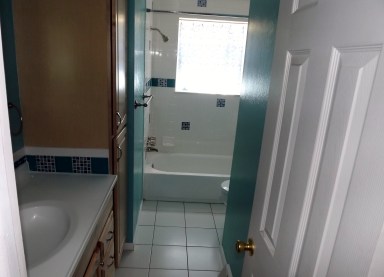
7 Smart Strategies for Bathroom Remodeling

BathroomHere’s how to get the bathroom of your dreams without making your budget a nightmare.

A mid-range bathroom remodel is a solid investment, according to Remodeling Magazine’s annual Cost vs. Value Report. An average bath remodel of $16,500 will recoup about 62% of those costs when it’s time to sell your home, and a more extensive $52,200 job returns about 55.5%. In addition, you can maximize the value of your investment by using these smart strategies, which will create a stylish yet budget-friendly bathroom.

1. Stick to a plan

A bathroom remodel is no place for improvisation. Before ripping out the first tile, think hard about how you will use the space, what materials and fixtures you want, and how much you’re willing to spend.

The National Kitchen and Bath Association (NKBA) recommends spending up to six months evaluating and planning before beginning work. That way, you have a roadmap that will guide decisions, even the ones made under remodeling stress. Once work has begun—a process that averages 2 to 3 months—resist changing your mind. Work stoppages and alterations add costs. Some contractors include clauses in their contracts that specify premium prices for changing original plans.

If planning isn’t your strong suit, hire a designer. In addition to adding style and efficiency, a professional designer makes sure contractors and installers are scheduled in an orderly fashion. A pro charges $100 to $200 per hour, and spends 10 to 30 hours on a bathroom project.

2. Keep the same footprint

You can afford that Italian tile you love if you can live with the total square footage you already have.

Keeping the same footprint, and locating new plumbing fixtures near existing plumbing pipes, saves demolition and reconstruction dollars. You’ll also cut down on the dust and debris that make remodeling so hard to live with.

Make the most of the space you have. Glass doors on showers and tubs open up the area. A pedestal sink takes up less room than a vanity. If you miss the storage, replace a mirror with a deep medicine cabinet.

3. Make lighting a priority

Multiple shower heads and radiant heat floors are fabulous adds to a bathroom remodel. But few items make a bathroom more satisfying than lighting designed for everyday grooming. You can install lighting for a fraction of the cost of pricier amenities.

Well-designed bathroom task lighting surrounds vanity mirrors and eliminates shadows on faces: You look better already. The scheme includes two ceiling- or soffit-mounted fixtures with 60 to 75 watts each, and side fixtures or sconces providing at least 150 watts each, distributed vertically across 24 inches (to account for people of various heights). Four-bulb lighting fixtures work well for side lighting.

4. Clear the air

Bathroom ventilation systems may be out of sight, but they shouldn’t be out of mind during a bathroom remodel.

Bathroom ventilation is essential for removing excess humidity that fogs mirrors, makesbathroom floors slippery, and contributes to the growth of mildew and mold. Controlling mold and humidity is especially important for maintaining healthy indoor air quality and protecting the value of your home—mold remediation is expensive, and excess humidity can damage cabinets and painted finishes.

A bathroom vent and water closet fan should exhaust air to the outside—not simply to the space between ceiling joists. Better models have whisper-quiet exhaust fans and humidity-controlled switches that activate when a sensor detects excess moisture in the air.

5. Think storage

Bathroom storage is a challenge: By the time you’ve installed the toilet, shower, and sink, there’s often little space left to store towels, toilet paper, and hair and body products. Here are some ways to find storage in hidden places.

  • Think vertically: Upper wall space in a bathroom is often underused. Freestanding, multi-tiered shelf units designed to fit over toilet tanks turn unused wall area into found storage.Spaces between wall studs create attractive and useful niches for holding soaps and toiletries. Install shelves over towel bars to use blank wall space.
  • Think moveable: Inexpensive woven baskets set on the floor are stylish towel holders. A floor-stand coat rack holds wet towels, bath robes, and clothes.
  • Think utility: Adding a slide-out tray to vanity cabinet compartments provides full access to stored items and prevents lesser-used items from being lost or forgotten.

6. Contribute sweat equity

Shave labor costs by doing some work yourself. Tell your contractor which projects you’ll handle, so there are no misunderstandings later.

Some easy DIY projects:

  • Install window and baseboard trim; save $250.
  • Paint walls and trim, 200 sq.ft.; save $200.
  • Install toilet; save $150.
  • Install towel bars and shelves; save $20 each.

7. Choose low-cost design for high visual impact

A “soft scheme” adds visual zest to your bathroom, but doesn’t create a one-of-a-kind look that might scare away future buyers.

Soft schemes employ neutral colors for permanent fixtures and surfaces, then add pizzazz with items that are easily changed, such as shower curtains, window treatments, towels, throw rugs, and wall colors. These relatively low-cost decorative touches provide tons of personality but are easy to redo whenever you want.

Let’s thank John Riha Published: March 4, 2011 for this valuable information!

Posted in Buying or Selling Real Estate, Centennial, Cherry Hills Village, Colorado, Denver, Denver Housing, Denver Residential Real Estate, Greenwood Village | Tagged , , , , , , , | Leave a comment