And right on the heels of this story, Redwood Trust Financial Institution reported opening in Inverness Office Campus with a facility growing into 500+ more jobs. Redwood Trust qualified for Colorado‘s Job Growth Incentive Tax Credit which should work out to about $2,000 per new job.
The Greenwood Village City Council and staff are pleased to welcome Fidelity Investments to Greenwood Village. Fidelity Investments has leased 100,000 square feet of office space in Fiddler’s Green Center located at 6501 South Fiddler’s Green Circle to operate a new customer contact center. Fiddler’s Green Center is owned and managed by the John Madden Co. Fidelity Investments new Greenwood Village location will add 500 new jobs to the Village economy.
“We are ecstatic that Fidelity Investments chose our beautiful city of Greenwood Village as their new location in the Denver metro area to grow and thrive,” said Mayor Ron Rakowsky. “We would also like to extend our appreciation to the John Madden Company for taking a primary role in attracting this premier company to the Village Center.”
Fidelity Investments, also known as FMR LLC, has $3.8 trillion in assets under administration and $1.6 trillion in managed assets, as of October 31, 2012. It was founded in 1946 and has more than 40,000 employees globally. Fidelity Investments, with headquarters in Boston, provides investment management, retirement planning, portfolio guidance, brokerage, benefits outsourcing, and other financial products and services to more than 20 million individuals and institutions.
Last year, buyers in the Denver area closed on $12.945 billion in homes. That is a $2.88 billion increase from the $10.063 billion in 2011, the biggest year-over-year increase on record. To put that increase in perspective, the increase is about the combined size of the GDPs of the countries of Belize and Bhutan.
If every season ticket holder at Sports Authority Field at Mile High had decided to sell their ticket to the Broncos vs Ravens playoff game at $300 each, the increased home sales dollar volume would have been enough to fill Mile High more than a dozen times over. Unfortunately, the Broncos aren’t going to the Super Bowl, but if the Denver housing market was a team, Team Denver would have been a comeback champion in 2012.
There were 46,299 home closings last year, a 17.5 percent increase from the 39,387 in 2011. The number of closings were the equivalent to every man, woman and child who lives in Greenwood Village, Capitol Hill, Highland and West Highland and Cherry Creek buying a home.
Homes placed under contract were even more impressive, growing by 19.1 percent to 56,412 last year, compared to 47,375 in 2010, which bodes well for continued strong sales in the first part of 2013. The average price of a home, year-to-date at the end of 2012, was $304,176, an 8.7 percent increase from the $279,856 at the end of 2011. “The stellar housing market provides a boost for the entire economy,” noted Patty Silverstein, chief economist for the Denver Metro Denver Economic Development Corp.”In 2012, the sheer number of sales was much bigger than any expectations. It was huge. And home prices steadily rose,” Silverstein said.
“Home sales have quite the multiplier effect,” Silverstein continued. “Obviously, it is money in the pocket of the seller. Whether they used it to buy a bigger home, a smaller home or become a renter, it is money that will find its way back into the economy. Then there is everyone involved in the transaction – the mortgage broker, the title insurance officials, the Realtor. And once somebody buys a home, they generally go out and furnish the home and the ripple effect continues.”
The price increase easily bested the inflation rate of about 2 percent, but wasn’t the double-digit returns found in formerly beat-up housing markets such as Phoenix, leading to worries another mini-bubble might be forming. Denver-area buyers, however, had fewer homes to choose from in 2012 than in almost four decades. There were only 7,706 unsold homes on the market in 2012, the lowest point since 1973.
The last time there were fewer homes for sale, Richard Nixon was President, the war in Vietnam was ending, and mortgage interest rates were at 8.54 percent compared with 3.35 percent for a 30-year, fixed-rate loan at the end of 2012. That also was the year that the Broncos posted their first winning season.
*Based on information from Metrolist, Inc. for the Denver housing market for the period 12/1/12 to 12/31/12. This representation is based in whole or in part on content supplied by Metrolist, Inc.
You’re ready to remodel but you want to make sure you get the best contractor for the job. Here’s what to ask the candidates before you decide.
1. Would you please itemize your bid?
Many contractors prefer to give you a single, bottom-line price for your project, but this puts you in the dark about what they’re charging for each aspect of the job. For example, let’s say the original plan calls for beadboard wainscot in your bathroom, but you decide not to install it after all. How much should you be credited for eliminating that work? With a single bottom-line price, you have no way to know.
On the other hand, if you get an itemized bid, it’ll show the costs for all of the various elements of the job—demolition, framing, plumbing, electrical, tile, fixtures, and so forth. That makes it easier to compare different contractors’ prices and see where the discrepancies are. If you need to cut the project costs, you can easily assess your options. Plus, an itemized bid becomes valuable documentation about the exact scope of the project, which may eliminate disputes later.
The contractor shouldn’t give you a hard time about itemizing his bid. He has to figure out his total price line by line anyway, so you’re not asking him to do more work, only to share the details. If he resists, it means he wants to withhold important information about his bid—a red flag for sure.
Homeowners generally assume that the bid they’re seeing is a fixed price, but some contractors treat their proposals as estimates, meaning bills could wind up being higher in the end. If he calls it an estimate, request a fixed price bid instead. If he says he can’t offer a fixed price because there are too many unknowns about the job, then eliminate the unknowns.
“Have him open up a wall to check the structure he’s unsure about or go back to your architect and solidify the design plans,” says Tampa, Fla., attorney George Meyer, who is chair-elect of the American Bar Association’s Forum on the Construction Industry. If you simply cannot resolve the unknowns he’s concerned about, have the project specs describe what he expects to do—and if he needs to do additional work later, you can do achange order (a written mini-bid for new work).
3. How long have you been doing business in this town?
A contractor who’s been plying his trade locally for 5 or 10 years has an established network of subcontractors and suppliers in the area and a local reputation to uphold. That makes him a safer bet than a contractor who’s either new to the business or new to the area—or who’s planning to commute to your job from 50 miles away.
You want to see a nearby address (not a PO box) on his business card—and should ask him to include one or two of his earliest clients on your list of references. This will help you verify that he hasn’t just recently hung his shingle—and will give you perspective from a homeowner who has lived with the contractor’s work for years. After all, the test of a quality job, whether it’s a bluestone patio or a family room addition, is how well it stands the test of time.
4. Who are your main suppliers?
You’ve found a few potential contractors, you’ve talked to the happy former clients on each of their reference lists, now it’s time for one additional bit of homework: talking to their primary suppliers. There’s no better reference for a tile setter, for example, than his preferred tile shop; for a general contractor than his favorite lumberyard or home center pro desk; for a plumber than the kitchen and bath showroom where he’s on a first name basis.
The proprietors of these shops know a contractor’s professional reputation, whether he has left a trail of unhappy customers in his wake, if he’s reliable about paying his bills—and whether he’s someone you’ll want to hire. The contractor should have absolutely no qualms about telling you where he gets his materials, as long as he’s an upstanding customer.
5. I’d like to meet the job foreman—can you take me to a project he’s running?
Many contractors don’t actually swing hammers. They spend their days bidding new work and managing their various jobs and workers. In some cases, the contractor you hire may not visit the jobsite every day—or may not even show himself again after you’ve signed the contract. So the job foreman—the one who’s working on your project every day—is actually the most important member of your team.
Meeting him in person and seeing a job that he’s running should give you a feel for whether he’s someone you want managing your project. Plus, it gives the general contractor an incentive to assign you one of his better crews since you’re more likely to hire him if you see his A Team. If the contractor says he’ll be running the job himself, ask whether he’ll be there every day. Again, he’ll want to give you a positive response—something you can hold him to later on.
The subtleties of how to hire a contractor
It’s not only the answers to these questions that will help you judge potential contractors—it’s the way they answer them. Were they easy to talk to and forthcoming with details or did they hem and haw and make you ask more than once? Difficulty communicating now means difficulty communicating on the job later. But clear, timely and thoughtful responses—combined with terrific references, great completed work that you’ve seen, and a smart take on your project—may mean you’ve found the right pro for your job.
Let’s thank Oliver Marks Published: September 30, 2009 for this valuable information.
Here is this week’s foreclosure list, please click on the date for the report.
This is a list of all homeowners who have had a Notice of Election and Demand (NED) filed on their home in the last week. These properties are in the initial stage of foreclosure. For past weeks lists please scroll down to the end.
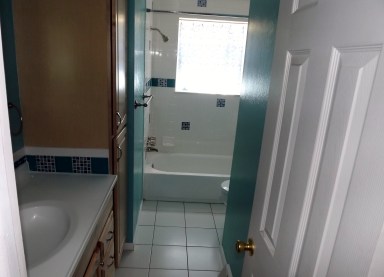
Here’s how to get the bathroom of your dreams without making your budget a nightmare.
A mid-range bathroom remodel is a solid investment, according to Remodeling Magazine’s annual Cost vs. Value Report. An average bath remodel of $16,500 will recoup about 62% of those costs when it’s time to sell your home, and a more extensive $52,200 job returns about 55.5%. In addition, you can maximize the value of your investment by using these smart strategies, which will create a stylish yet budget-friendly bathroom.
1. Stick to a plan
A bathroom remodel is no place for improvisation. Before ripping out the first tile, think hard about how you will use the space, what materials and fixtures you want, and how much you’re willing to spend.
The National Kitchen and Bath Association (NKBA) recommends spending up to six months evaluating and planning before beginning work. That way, you have a roadmap that will guide decisions, even the ones made under remodeling stress. Once work has begun—a process that averages 2 to 3 months—resist changing your mind. Work stoppages and alterations add costs. Some contractors include clauses in their contracts that specify premium prices for changing original plans.
If planning isn’t your strong suit, hire a designer. In addition to adding style and efficiency, a professional designer makes sure contractors and installers are scheduled in an orderly fashion. A pro charges $100 to $200 per hour, and spends 10 to 30 hours on a bathroom project.
2. Keep the same footprint
You can afford that Italian tile you love if you can live with the total square footage you already have.
Keeping the same footprint, and locating new plumbing fixtures near existing plumbing pipes, saves demolition and reconstruction dollars. You’ll also cut down on the dust and debris that make remodeling so hard to live with.
Make the most of the space you have. Glass doors on showers and tubs open up the area. A pedestal sink takes up less room than a vanity. If you miss the storage, replace a mirror with a deep medicine cabinet.
3. Make lighting a priority
Multiple shower heads and radiant heat floors are fabulous adds to a bathroom remodel. But few items make a bathroom more satisfying than lighting designed for everyday grooming. You can install lighting for a fraction of the cost of pricier amenities.
Well-designed bathroom task lighting surrounds vanity mirrors and eliminates shadows on faces: You look better already. The scheme includes two ceiling- or soffit-mounted fixtures with 60 to 75 watts each, and side fixtures or sconces providing at least 150 watts each, distributed vertically across 24 inches (to account for people of various heights). Four-bulb lighting fixtures work well for side lighting.
4. Clear the air
Bathroom ventilation systems may be out of sight, but they shouldn’t be out of mind during a bathroom remodel.
Bathroom ventilation is essential for removing excess humidity that fogs mirrors, makesbathroom floors slippery, and contributes to the growth of mildew and mold. Controlling mold and humidity is especially important for maintaining healthy indoor air quality and protecting the value of your home—mold remediation is expensive, and excess humidity can damage cabinets and painted finishes.
A bathroom vent and water closet fan should exhaust air to the outside—not simply to the space between ceiling joists. Better models have whisper-quiet exhaust fans and humidity-controlled switches that activate when a sensor detects excess moisture in the air.
5. Think storage
Bathroom storage is a challenge: By the time you’ve installed the toilet, shower, and sink, there’s often little space left to store towels, toilet paper, and hair and body products. Here are some ways to find storage in hidden places.
Think vertically: Upper wall space in a bathroom is often underused. Freestanding, multi-tiered shelf units designed to fit over toilet tanks turn unused wall area into found storage.Spaces between wall studs create attractive and useful niches for holding soaps and toiletries. Install shelves over towel bars to use blank wall space.
Think moveable: Inexpensive woven baskets set on the floor are stylish towel holders. A floor-stand coat rack holds wet towels, bath robes, and clothes.
Think utility: Adding a slide-out tray to vanity cabinet compartments provides full access to stored items and prevents lesser-used items from being lost or forgotten.
6. Contribute sweat equity
Shave labor costs by doing some work yourself. Tell your contractor which projects you’ll handle, so there are no misunderstandings later.
Some easy DIY projects:
Install window and baseboard trim; save $250.
Paint walls and trim, 200 sq.ft.; save $200.
Install toilet; save $150.
Install towel bars and shelves; save $20 each.
7. Choose low-cost design for high visual impact
A “soft scheme” adds visual zest to your bathroom, but doesn’t create a one-of-a-kind look that might scare away future buyers.
Soft schemes employ neutral colors for permanent fixtures and surfaces, then add pizzazz with items that are easily changed, such as shower curtains, window treatments, towels, throw rugs, and wall colors. These relatively low-cost decorative touches provide tons of personality but are easy to redo whenever you want.
Let’s thank John Riha Published: March 4, 2011 for this valuable information!
How to Save 20% to 40% on Your Kitchen Remodel Without Even Trying
You can picture your new, beautifully renovated dream kitchen. But your budget won’t allow it unless you cut costs. Here’s how to save on your kitchen remodel.
Below are 7 great recommendations for ways to shave costs off your kitchen remodel. Each recommendation includes a percentage of the savings you can expect to trim off the overall cost of your kitchen remodeling. Because of variables, such as the price of materials in your area, the percentages are given as a range.
If you do all the recommendations, you’ll knock 20% to 40% off the cost of your project.
1. Skip the custom cabinet shop. All of the major cabinet manufacturers offer a range of styles and finishes in their stockproduct lines. The only compromise you’ll make is that you can’t get cabinet widths sized to the exact fraction of an inch.
“Stock cabinets come in 3-inch increments, so you may need to get something slightly smaller than the space you have to fill,” says Cambridge, Mass., kitchen designer Jean Courtney. But nobody will ever notice. “Your contractor will use matching filler pieces and moldings to hide any gaps and make everything look custom fitted.”
Your savings: 5% to 12%
2. Keep the sink and appliances in their current locations. That avoids having to run new electrical wiring, natural gas lines, plumbing pipes, and hood-vent lines, knocking thousands off your construction costs.
Your savings: 5% to 10%
3. Select a simple cabinet door design. A classic shaker door, which is plain and elegant, comes at about half the cost of something more complex, such as an arch-top panel with intricate moldings. And you’ll get a more timeless, never-go-out-of-style look.
Your savings: 2% to 4%
4. Choose a stock stain or paint finish on the cabinets instead of a trendy two-tone glazed finish. Most cabinet manufacturers offer an array of good-looking, durable stock finishes.
Your savings: 3% to 4%
5. Keep the existing window locations. Using the current openings — and resisting the temptation to increase window size — reduces construction costs considerably because the contractor won’t have to frame out new openings.
Your savings: 3% to 6%
6. Simplify the edge profile of your countertops. A waterfall, ogee, or other fancy edge choice can add hundreds to the fabrication costs of your countertops. Trim that cost by opting for a square or simple round-over treatment.
Your savings: 1% to 2%
7. Shop for discontinued hardwood flooring and backsplash tiles. “When a particular line of subway tile or oak flooring is going out of production, stores slash the prices to move the merchandise — but it’s perfectly good stuff,” says Courtney.
Another option: Look for salvaged building materials, such as sinks, faucets, and lighting fixtures.
Your savings: 1% to 2%
Let’s thank Oliver MarksPublished: September 11, 2012 for this valuable information!
You can get that warm, fuzzy holiday feeling and make a few bucks by responsibly ditching all the excess stuff you accumulate, particularly at this time of year.
Before you cast off, sort out
This video by home organizer Alejandra Costello demonstrates her system for organizing items you wish to donate, sell, return, or exchange. You designate an area in the home — preferably near an exit — for the stuff you don’t want to forget to take out the door with you. What we really liked best about this video is that she includes tips for keeping your downsizing efforts on track.
Hazardous household materials
Sure, we all know where to recycle stuff like soda cans and water bottles, but what about dicey items like medications, paint thinners, or asbestos?
Earth911.com, along with its free app iRecycle, is one of the best sources for finding acceptance centers that handle household hazardous waste. Just enter the type of junk you need to unload, like compact fluorescent light bulbs (did you know they have traces of mercury?), along with your ZIP code, and it provides the nearest recycling center to you.
Learn more about stuff that’s considered household hazardous waste, by watching this
hilarious Canadian video made for the city of Toronto.
Old technology
If you want to recycle appliances, cameras, computers, and TVs, Best Buy Recycle will take them, no matter where you bought them originally. The retailer charges $100 to pick up old appliances like TVs if you’re not also having a new Best Buy item delivered to you. It says it destroys CPUs to protect your data privacy. And the recycled bits and pieces become raw materials manufacturers can use to make everything from appliances to park benches. Check out the video:
If you want to sell your current smartphone or Mac gadget quickly, Gazelle.com will give you an instant estimate and a free shipping label. Plus, you can take comfort knowing that Gazelle believes in reusing products first before trying to recycle them.
FYI, while the company does protect your privacy by destroying SIM cards and erasing personal data found on devices they receive, Gazelle recommends you remove your SIM card and delete any personal information on your device before sending it in.
Junk mail
The best way to get rid of junk mail from accumulating at home is to stop it from being delivered in the first place. By creating a free account at Catalogchoice.org, you can banish catalogs and assorted marketing items from your home forever. Plus, their MailStop Browser extension for Firefox lets you opt out of mailing lists in real time when you shop online.
Lastly, if you’re willing to pay $35 a year, CatalogChoice will also prevent data brokers from selling your info to other direct marketers. You can check out the endorsement the National Wildlife Federation gave this service.
Kids’ stuff
We all know how quickly kids outgrow their stuff. Once Upon a Child buys gently used clothing, toys, and baby gear. It won’t accept items that have been recalled or don’t meet their safety standards. To find a store location near you so you can swap your items for cash or trade for things your kid currently needs, visit their website.
Discover Books matches second-hand books with people who want them. It uses a proprietary software system to try to find a new owner for your old reads through an online retailer, or tries to donate it to an organization that supports literacy. Plus, if Discover Books can’t find a book a new home, it’s sent to a recycling center to begin a fresh life as something else. To see how this organization supports children’s literacy efforts, check out this video.
Places that buy books outright other than textbooks are becoming increasingly rare. Cash 4 Books pays you for books it wants, plus covers the cost of shipping to their distribution center. Just go to their site and type in the ISBN numbers of the books you plan to sell. Check out the video here to see how this process works.
FYI, if you really want to cut down on your carbon footprint, try donating your books to local libraries, schools, and hospitals. Or build your own free library in your front yard and let passersby help themselves.
Household linens, cleaning supplies, and old cars
If you have old towels, blankets, heating pads, cleaning supplies, and even a car you need to get rid of, consider donating to a local animal shelter like the ASPCA. Every shelter has different needs, from canned dog food to office supplies. But the items we listed are often animal rescue organizations’ top need. To find a local shelter near you, go to the ASPCA site.
Do you need a kick in the pants in order to donate? Check out this happy ending in this video:
Additional ways to part with your stuff
Donate, trade, or sell: Krrb.com is an alterative to sites like eBay, Craigslist, andFreecycle. Krrb makes it fairly simple to buy, sell, rent, trade, or even give your stuff away. Plus, the site offers a republish function that reposts your listings from Etsy, Craigslist, or eBay to Krrb with one click. They also have an iPhone app so you can find stuff for sale right in your neighborhood:
Krrbin’ On The Go – Our Editors Take A Spin On The Krrb iPhone App from Krrb on Vimeo.
Charity thrift shop locator: TheThriftShopper.com makes it a cinch to find charity thrift stores in your area by entering your ZIP code. Plus, many of the listings include the shop’s website, so you can learn more about each organization before deciding where to donate.
Let’s thank Deirdre SullivanPublished: November 13, 2012 for this valuable information.









 MyTownCryer
You must be logged in to post a comment.