
Is IKEA’s signage too big? You be the judge!

IKEA Signage in Centennial, Colorado 80112
Is IKEA’s signage too big? You be the judge!
IKEA Signage in Centennial, Colorado 80112

Maxwell Smart Phone
Downloadable iPhone and Android apps offer ways to maintain, improve, and save money on your home. Your smart phone can save you time and money! It’s not just for Maxwell anymore.
Match that paint color
If you see a color at a friend’s house that would look great in your home, use Benjamin Moore’s Ben Color Capture or Sherwin-Williams’ ColorSnap, free mobile apps for iPhone, to conjure up a matching paint color and code in a jiffy. Take a photo with your phone, and the app matches the paint as closely as possible, and will display secondary and complementary colors. (ColorSnap is also available for BlackBerry.)
Good Housekeeping magazine has placed all their best stain-removal and cleaning advice into their free @Home app. It also includes decorating ideas and a searchable list of the 5,000-plus products that have earned a Good Housekeeping seal.
If you’re searching for a cheap replacement part, or looking for a deal on slightly-used appliances and materials, eBay’s free Mobile app lets you search the auction site’s entire marketplace from iPhone, Android, Windows Phone 7, and BlackBerry devices. You can also put any of your disused-but-functional household items up for sale and recoup some cash.
For listings close to home, search the popular Craigslist site through the free Craigsnotificafor Android or Craigspro for iPhone.
Finding lower prices on electronics and appliances used to mean driving from store to store or scanning Sunday circulars. With the free Price Check by Amazon, you can scan a product’s barcode at a store and compare the price against Amazon and other merchants. (Android and BlackBerry versions are also available.) PriceGrabber has a similar app for iPhone and Android.
For $1.99, the iHandy Carpenter app puts a ruler, protractor, bubble level, surface level, and plumb bob into your iPhone, allowing you to make measurements without lugging out the tool box. It’s perfect for simple jobs like hanging frames and mirrors.
Need just a level? There’s a free app for iPhone from iHandy and for Android fromJohnson.
Before you approach a home improvement project, use the $1.99 Handy Man DIY to record dimensions of flooring, windows, walls, and more. It calculates how much material you’ll need and gives you a cost estimate.
If you’re in the middle of a home improvement job and need supplies, use the $4.99 Work Shop app to order them from your iPhone. It’s also a great tool for keep track of expenses or plan your budget for a future project.
With the iPhone’s bright display and the super-bright LED flash, you can use it in place of a traditional flashlight to illuminate crawl spaces, attics, cabinet recesses, and other dark spots. There are many apps for this purpose, but two favorites are the 99-cent Flashlight(and 99-cent Flashlight+.
Wonder why certain vegetation isn’t growing in your yard? Landscaper’s Companionprovides a reference guide to more than 2,000 plants. You can search for a plant based on your garden’s sun exposure and garden zone, helping to ensure you won’t get any dead leaves after planting. The app costs $9.99.
Using your iPhone’s magnetometer, StudFinderPRO can help you locate studs by locating the magnetic fields emitted by metal objects like screws and nails. The app costs $2.99. A free Magnetic Stud Finder is available for Android devices.
Need decorating ideas for inspiration? Check out Home Interior Layout Designer–Mark On Call for $2.99. Created by an interior designer, the app can help you plan a space and determine if furnishings will fit. Also consider the $4.99 Living Room app for iPad and the 99-cent Dream Home app for iPhone.
By: Les Shu
Published: February 17, 2011
A writer covering the latest technologies and trends for a variety of national publications, Les Shu is currently automating his home with the newest doodads to make it smarter than he is.

iPad in Your Car
1. SmarterAgent – SmarterAgent is a true mobile real estate pioneer overlaying approximately 300 markets with IDX-powered home search. Pinpoint your GPS location and find what’s for sale in your immediate area. Select a home from the search results to view price details, the quantity of beds/baths, square footage, interior and exterior features, pictures and much more. The “Broker Reciprocity” logo at the bottom of the data lets you know you are seeing every public MLS listing in that area.SmarterAgent is free and provides an abundance of information.
2. Offender – This app maps registered sex offenders in all 50 states. This is a helpful tool for home buyers with children, complete using up-to-date information for all areas. Yours for just.99.
3. Homes.com – This free mobile real estate search app enables iPad or iPhone users to quickly find nearby homes available or for rent. It provides fast and full-featured searches of Homes.com listings nationwide. Features include Google maps, driving directions and rich property details including photo slideshows.
4. NearBuy – NearBuy uses advanced GPS to search for apartments, condominiums and homes available for rent in your area, indexed by price and displayed on a map. This free of charge app also makes it possible to find nearby parks and schools.
5. iLiving – This app makes it possible to integrate 3D-furniture within a picture of your home on the iPad. For example, the user can take a photo of a room (say, for example, during an open house) and then “design” it by placing various articles of furniture within the image. Just $2.99.
6. Home Tracker – When shopping for homes, you’ll easily lose track of all the homes you’ve toured or researched. Home Tracker keeps track on your behalf. Store information on each property such as address, ZIP code, price and size; add notes; take photos; rate the property condition, location and appeal; star your favorites; map the property. Priced at just $4.99.
7. Morgulator – When searching for a new home, a mortgage calculator is really a must-have. This app gives you the usual mortgage information determined by interest rate, term and downpayment. Just.99.
8. Walk Score – For the lifestyle-seeking and quality-of-life-seeking home searcher, this free app calculates the “walkability” of any neighborhood, simply using location-aware technology.
9. Around Me – This free app features an entire list of the many businesses in the classification you have tapped on together with the distance from where you will be. For each record you can choose to see its location on the map, view the route from where you are, include the data to your contact list or email the data to a buddy.
10. Real Estate Term Dictionary – Be in the know in regards to your real estate transaction. This free app will put 3,000 lingo at the fingertips to articulate. One of the most comprehensive app of its kind available, the Dictionary of Real Estate Terms (Lite) provides a convenient and user-friendly reference tool

Exterior Home Care
Cleaning and Caring for Siding
It’s true, one shouldn’t judge a book by its cover, but to a buyer, the exterior of a home is the their first impression. Cleaning, caring and repairing your home’s exterior surface once every year will pay off in the form of a long life and increased value for your home.
Cleaning wood, vinyl, metal, stucco, brick, fiber-cement siding
All types of siding benefit from a good cleaning once every year to remove grit, grime, and mildew. The best way—whether you have wood, vinyl, metal, stucco, brick, or fiber-cement—is with a bucket of warm, soapy water (1/2 cup trisodium phosphate—TSP, available at grocery stores, hardware stores, and home improvement centers—dissolved in 1 gallon of water) and a soft-bristled brush attached to a long handle. Divide your house into 20-foot sections, clean each from top to bottom, and rinse. For two-story homes, you’ll be using a ladder, so keep safety foremost.
Cleaning an average-sized house may take you and a friend every bit of a weekend. If you don’t have the time—or the inclination—you can have your house professionally cleaned for $300-$500. A professional team will use a power washer and take less than a day.
You can rent a power washer to do the job yourself for about $75 per day, but beware if you don’t have experience with the tool. Power washers force water through a nozzle at high pressure, resulting in water blasts that can strip paint, gouge softwoods, loosen caulk, and eat through mortar. Also, the tool can force water under horizontal lap joints, resulting in moisture accumulating behind the siding. A siding professional has the expertise to prevent water penetration at joints, seams around windows and doors, and electrical fixtures.
Right before you clean is the ideal time to inspect your house for signs of damage or wear and tear. A house exterior is most vulnerable to water infiltration where siding butts against windows, doors, and corner moldings, says Frank Lesh, a professional house inspector in Chicago and past president of the American Society of Home Inspectors. For all types of siding, look for caulk that has cracked due to age or has pulled away from adjacent surfaces, leaving gaps. Reapply a color-matched exterior caulk during dry days with temperatures in excess of 65 degrees F for maximum adhesion.
Other defects include wood siding with chipped or peeling paint, and cracked boards and trim. If you have a stucco exterior, be on the lookout for cracks and chips. For brick, look for crumbling mortar joints. Repair defects before cleaning. The sooner you make repairs, the better you protect your house from moisture infiltration that can lead to dry rot and mold forming inside your walls.
Damage to wood, vinyl, and fiber-cement horizontal lap siding often occurs because of everyday accidents—being struck by sticks and stones thrown from a lawn mower, or from objects like baseballs. Repairing horizontal lap siding requires the expertise to remove the damaged siding while leaving surrounding siding intact. Unless you have the skills, hire a professional carpenter or siding contractor. Expect to pay $200-$300 to replace one or two damaged siding panels or pieces of wood clapboard.
Houses with wood siding should be repainted every five years, or as soon as the paint finish begins to deteriorate. A professional crew will paint a two-story, 2,300 square foot house for $3,000-$5,000. If you’ve cleaned your house exterior yourself, you’ve done much of the prep work and will save the added cost that a painting contractor would charge to clean the siding before painting.
Fiber-cement siding, whether it comes with a factory-applied color finish or is conventionally painted, requires repainting far less often (every 8-10 years) than wood siding. That’s because fiber-cement is dimensionally stable and, unlike wood, doesn’t expand and contract with changes in humidity.
It’s a good idea to specify top-quality paint. Because only 15% to 20% of the total cost of repainting your house is for materials, using a top-quality paint will add only a nominal amount—about $200—to the job. However, the best paints will outperform “ordinary” paints by several years, saving you money.
Crumbling and loose mortar should be removed with a cold chisel and repaired with fresh mortar—a process called repointing. An experienced do-it-yourselfer can repoint mortar joints between bricks, but the process is time-consuming. Depending on the size of the mortar joints (thinner joints are more difficult), a masonry professional will repoint brick siding for $5-$20 per square foot.
Efflorescence—the powdery white residue that sometimes appears on brick and stone surfaces—is the result of soluble salts in the masonry or grout being leached out by moisture, probably indicating the masonry and grout was never sealed correctly. Remove efflorescence by scrubbing it with water and white vinegar mixed in a 50/50 solution and a stiff bristle brush. As soon as the surface is clear and dry, seal it with a quality masonry sealer to prevent further leaching.
Persistent efflorescence may indicate a moisture problem behind the masonry. Consult a professional building or masonry contractor.
Stubborn black spotty stains are probably mildew. Dab the area with a little diluted bleach—if the black disappears, it’s mildew. Clean the area with a solution of one part bleach to four parts water. Wear eye protection and protect plants from splashes. Rinse thoroughly with clean water.
Seal cracks and small holes with color-matched exterior acrylic caulk. Try pressing sand into the surface of wet caulk to match the texture of the surrounding stucco. Paint the repair to match.
Take time to inspect and clean your house siding, and you’ll be rewarded with a trouble-free exterior.
By: John Riha
Published: August 31, 2009
John Riha has written six books on home improvement and hundreds of articles on home-related topics. Riha has been a residential builder, the editorial director of the Black & Decker Home Improvement Library, and the executive editor of Better Homes and Gardens magazine. His standard 1968 suburban house has been an ongoing source of maintenance experience.

A Good Cup of Coffee
“A Little Bit of Sugar Makes the Medicine Go Down”,
Make spring cleaning less of a chore by following these smarter–and mostly greener–tips for this annual rite of homeownership. Some good coffee helps too!Bathrooms
When it’s time to get down and dirty, many people start with the bathroom. Allen Rathey, founder of The Housekeeping Channel, says removing mineral deposits, rust, and such from toilets doesn’t have to mean chemical warfare. Don rubber gloves and use a pumice stone to erase stubborn stains. If you want more scouring power, Rathey recommends mixing baking soda with acidic vinegar. The concoction is just as effective as conventional cleaners, and there are no toxic fumes to inhale. This approach works equally well on tub and shower stains.
Buy your supplies in bulk to save. A 64-ounce bottle of vinegar costs about $4; a 12-pound bag of baking soda, about $7. Both items can be used throughout the house. For just $1 you can mix equal parts vinegar and water in a 32-ounce spray bottle to make a terrific all-purpose surface cleaner. That’s about $4 cheaper than buying a spray cleaner at the store.
Spring cleaning is the perfect time to extract dirt from porous grouted surfaces. For tile floors use your usual cleaner, but don’t mop. Instead, run a wet/dry vac, which will suck contaminants out of the grout. Mopping drives the grime into the grout rather than removing it. According to Rathey, grout can harbor stinky bacteria that leave a bad odor in the bathroom. This technique is more time-consuming than mopping, but it’s worthwhile to do at least once a year.
The kitchen can be a tough room to clean because there’s usually so much stuff in it, says Justin Klosky, founder and creative director of The OCD Experience, an organizational service. Before you break out the broom, go through your cabinets and drawers, and put together a box of items to donate and a box of items to store somewhere besides the kitchen. Clear your countertops of everything except items you use nearly every day.
After you’ve de-cluttered, you can get to work cleaning. Cloud Conrad, vice president of marketing for cleaning company Maid Brigade, says one tool you shouldn’t overlook is an all-purpose microfiber cloth (about $5). These aren’t run-of-the-mill dusting rags. Microfiber is a densely woven synthetic fabric that picks up dirt and greasy deposits without chemicals thanks to its unique composition. You should be able to clean surfaces like countertops, sinks, and stoves with warm water, a microfiber cloth, and a bit of elbow grease, Conrad says.
Since you prepare your food in the kitchen, consider using green commercial products for surfaces, or make your own vinegar/water spray. Conventional cleaners may remove dirt, but they can also harbor some nasty substances you don’t want in your PB&J. Microfiber, vinegar, and baking soda will clean and disinfect almost every kitchen surface at a fraction of the price. Don’t neglect once-a-year chores like vacuuming refrigerator coils (unplug your fridge first), and tossing out expired food from the back of the pantry.
Since bedrooms are such individual spaces, there’s a lot of diversity in what needs to happen. Most homeowners should at least rotate and flip innerspring mattresses, and store out-of-season sheets and clothing. Also go through your closet, and donate or Freecycleitems you haven’t worn in the last 12 months. For carpets and mattresses, consider using a professional cleaning service. Figure a typical mattress will cost about $70-$90 to clean, a bargain considering how much time you spend in bed.
Even if you’re getting your carpet professionally cleaned, you still need to break out the vacuum, says Leslie Reichert, owner of The Cleaning Coach. Use the hose attachment to get to the hidden particles along baseboards, under your bed, and in your curtains, favorite environments of dust mites. If you have a large-capacity dryer, throw curtains in on high heat for good measure to kill the little pests.
Another surface you should consider getting professionally cleaned is living room upholstery. It can be tricky to know exactly how to deep-clean different types of fabrics, says Rathey, especially if there are stains you can’t quite identify. Costs vary widely depending on the size of the furniture piece and the quality and state of its covering, but a typical sofa might run $70 to $90.
Microfiber cloths are great to use in the living area as well. Make sure you have cloths for each area of the house, though, so you’re not cross-contaminating bathroom, kitchen, and living areas. Use a damp microfiber cloth to wipe down windows, wood, mirrors, the tops of bookshelves, ceiling fan blades, and even the plastic housing of electronics for a quick, chemical-free clean.
Published: September 30, 2009
Alyson McNutt English has written about keeping a house healthy and clean for publications like Pregnancy, Conceive, and BobVila.com. A big believer in baking soda, vinegar, and microfiber, she likes to do her “spring cleaning” in the fall.

Cleaning Your Gutters
Once upon a time, cleaning gutters was not an issue in Denver, Colorado. Even the most wooded areas today, were originally high desert plains and grasslands. Now will irrigation, fertilization and care, trees are filling our gutters and making a mess. What to do? Clean your gutters; money and or time well spent, but be careful!
Clean gutters to protect your siding and landscape plantings, and prevent thousands of dollars of damage to your foundation.
How often to clean gutters
Clean gutters at least once a year—twice a year if you have overhanging trees. Also, clean clogged gutters after big storms. Clogs often occur where downspouts join the gutter system—check these areas closely.
If climbing ladders is not your cup of tea, you can hire someone to do the job for you for between $50 and $250, depending on the size and height of your house.
Interested in an ounce of prevention? You can slow clogging by installing gutter covers in the form of mesh screens, clip-on grates, or porous foam. However, the cost can be more than the gutters themselves and covers need regular maintenance to keep them clear. Expect to pay $6 to $8 per running foot for gutter covers, installed.
By: Pat Curry
Published: October 8, 2010
Serial remodeler Pat Curry is a former senior editor at BUILDER, the official magazine of the National Association of Home Builders, and a frequent contributor to real estate and home-building publications.
DenverDotCom This Dramatic Partnership Will Allow Kentwood’s DenverRealEstate.com Website to Extend Market Reach While Providing Advanced Real Estate SearchCapabilities on Denver.com
Denver.com is Denver’s leading intuitively-branded home on the Web. It focuses on providing local neighborhood and community information in the Denver metropolitan area. By combining two of Denver’s top web destinations, users will have a unique opportunity to explore the city and discover areas that fit their lifestyle preferences.
Home sellers will receive exclusive exposure for their properties through this one-of-a-kind partnership. Visit this page online at Denver.com/realestate.

Mile High Stadium
“I Can See Clearly Now”, as the song goes makes perfect sense for cleaning your windows. Window cleaning with non-toxic ingredients and reusable cloths protects your health, preserves resources, gains a streak-free view, and stretches your budget.
Mix a green window cleaning solution
Commercials cleaners leave behind a waxy residue on windows that can result in streaks. A homemade window cleaning solution made with vinegar and water helps cut through grime, minimizes streaking and water spots, and prevents windows from fogging.
The first time you clean your windows with a homemade vinegar solution, include a few drops of dish detergent to eliminate the waxy buildup. Combine these ingredients in a spray bottle for streak-free windows:
After an inaugural washing, keep your windows spotless with a window cleaning solution made from 2 teaspoons white vinegar mixed in 1 quart warm water. (Too much vinegar can etch window glass, which results in clouding.)
You can whip up gallons of window cleaning solution for a few dollars: A 32-ounce bottle of white vinegar costs about $2. A 16-ounce bottle of eco-friendly dish soap costs about $3.50. By comparison, a 16-ounce bottle of commercial window cleaner costs about $3.
Use microfiber cloths, rather than paper towels or newspapers, for window cleaning. Paper towels are manufactured from trees and end up in the landfill. Newspapers can blacken your hands and fall apart. Microfiber cloths are affordable, lint-free, and can be washed and reused again and again.
A six-pack of reusable microfiber cleaning cloths can be purchased at national discount stores for less than $10. By comparison, an eight-pack of bargain-priced paper towels costs about $9.
With four home renovations to her credit, Jan Soults Walker is a devotee of improvements, products, and trends for the home and garden. For 25 years she’s written for a number of national home shelter publications, and has authored 18 books on home improvement and decorating.
Published: October 11, 2010
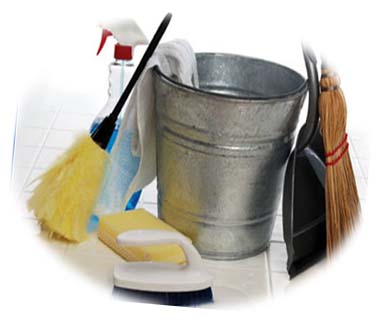
The Right Tools For Deep Cleaning
Locked in doors on that rainy or snowy spring day? You can deep clean your house and you’ll brighten rooms and help maintain your home’s value. The number one physical characteristic that attracts buyers is cleanliness!
De-bug the light fixtures
See that bug burial ground within your overhead fixtures? Turn off the lights and carefully remove fixture covers, dump out flies and wash with hot soapy water. While you’re up there, dust bulbs. Dry everything thoroughly before replacing the cover.
Dirt and dust build up in heat vents and along register blades. Vents also are great receptacles for coins and missing buttons. Unscrew vent covers from walls or pluck them from floors, remove foreign objects, and vacuum inside the vent. Clean grates with a damp cloth and screw back tightly.
To deep clean brass door hinges, handles, and cabinet knobs, thoroughly wipe with a damp microfiber cloth, then polish with Wright’s or Weiman brass cleaner ($4). Dish soap shines up glass or stainless steel knobs. Use a Q-tip to detail the ornamental filigree on knobs and handles.
Any amateur can wipe a few fingerprints off cover plates that hide light switches, electric outlets, phone jacks, and cable outlets. But only deep cleaners happily remove plates to vacuum and swipe the gunk behind. (OK, we’re a little OCD when it comes to dirt!) Make sure cover plates are straight when you replace them. And pitch plates that are beyond the help of even deep cleaning. New ones cost less than $2 each.
Peeling, drooping weather stripping on doors and windows makes rooms look old. If the strip still has some life, nail or glue it back. If it’s hopeless, cut out and replace sections, or just pull the whole thing off and start new. A 10-ft. roll of foam weather stripping costs $8; 16-ft. vinyl costs about $15.
Some drip pans are beyond the scrub brush. Replacing them costs about $3 each and instantly freshens your stove.
By: Jane Hoback
Published: January 14, 2011
Jane Hoback is a veteran business writer who has written for the Rocky Mountain News, Natural Foods Merchandiser magazine, and ColoradoBIZ Magazine.

MyTownCryer & Denver Real Estate by Tom Cryer, SCRP
In this market, buyers are compelled to finally get off the couch, call their Realtors and attempt to buy residential real estate through out the metro area.
Recently showing property in Evergreen, my buyer fell in love with a home. Multiple offers, the same in Parker with another buyer. Showing in Highlands Ranch and Centennial with another set of buyers, same result, multiple offers.
I’m not seeing appreciation, but I am seeing properties with compelling pricing strategies receive more than their fair share of attention. Setting up showings on 12 properties for the weekend up and down the Denver Metro Area, several of the properties had received recent offers and were no longer accepting showings,
Here’s what I think is happening. First, let’s examine the pool of inventory. With very little builder inventory competing in the market place for more than 2 years now, owner occupied resales, shorts sales in various levels of occupancy and bank owned properties predominate in our market.
When the probability of a short sale ever closing or closing in a reasonable period of time factored into the process, at least 30% of the available inventory disappears for a buyer that needs to close in the next 30-60 days. That leaves 60-70% of the inventory remaining. With the supply of listings down considerably from last year in most MLS areas, this creates a shortage of well located, well priced, well cared for homes, and I’m here to tell everyone, at many price points, the pickings are slim!
Here’s what makes short sales so tough:
Long story short, this segment of the inventory pool is a mess.
Owner occupied, well cared for, well priced properties where the seller has enough equity to close, or is willing to bring funds to closing sounds enticing doesn’t it? Well, it doesn’t happen very often. Good luck finding this type of property in the neighborhood and on the site you like with the floor plan desired!
Finally, bank owned inventory that can range from very nice fixed up and presented to the fly covered, filthy, poorly located and over priced property with little or no appeal.
By now, you understand why so few properties are receiving so many multiple offers. For the meantime, I’m predicting more of the same. Happy hunting; now’s the time for professional help more than ever before. Have you hugged your Realtor today?


 MyTownCryer
You must be logged in to post a comment.