Gas Prices, Mortgage Rates – The Denver Home Ownership Helix

The Historical Trend of Gas Prices, Interest Rates & Average Denver Home Prices

Denver Market Watch

Denver Market Watch

Gas Prices, Mortgage Rates and Average Home Prices weigh heavily on the American Household.  The chart above offers some relationship in for Denver Families.  Take a look, I’d love to hear your comments on how these three household costs impact our local economy.

Posted in 2010 Mid Year Denver Market Watch, Denver, Denver Housing, Denver Residential Real Estate, homeownership, Mortgage, Mortgage Interest Deduction MID, MyTownCryer - Denver Real Estate - Tom Cryer, Uncategorized | Leave a comment

REAL Trends 500 Ranks Kentwood #3 in the Top Ten

5690 DTC Blvd. #600W

Home of the Finest Realtors

REAL Trends, the trusted source in all things related to the real estate brokerage business for more than 20 years has once again published their annual production report.  And, once again, the Kentwood Companies have ranked in the Top Ten at #3.  When compared to these other markets, these results are quite impressive.  Look for more good things to happen in 2011!  Straight from REAL Trends below:

Top Firms Ranked by Closed Sales Volume Per Sales Associate
Ranking of the 25 firms in the REAL Trends500 with the highest productivity per sales associate (as measured by closed sales volume)
Sales Volume Per Sales Associate
Rank Company
1 Washington Fine Properties, LLC Washington DC $10,099,342
2 Slifer Smith & Frampton Real Estate Avon CO $9,145,789
3 Kentwood Real Estate Greenwood Village CO $7,255,255
4 Today Sotheby’s International Realty San Carlos CA $6,698,942
5 Paragon Real Estate Group San Francisco CA $6,500,000
6 RE/MAX of Boulder Boulder CO $6,420,623
7 Sereno Group Real Estate Los Gatos CA $6,176,923
8 Martha Turner Properties, LP Houston TX $5,992,539
9 The Group, Inc. Real Estate Fort Collins CO $5,800,879
10 Redfin Seattle WA $5,790,238
Posted in 2010 Mid Year Denver Market Watch, Buying or Selling Real Estate, Centennial, Cherry Hills Village, Colorado, Denver, Denver Housing, Denver Residential Real Estate, Greenwood Village, Uncategorized | Tagged | Leave a comment

“Points of Pride” for Cherry Creek School District 2010

Cherry Creek School Disctrict

Cherry Creek School Disctrict

CCSD Students Outpace Peers

Students in the Cherry Creek School District continue to score well above the state average in reading, writing, math and science, as measured by the Colorado Student Assessment Program (CSAP). District students also continue to progress at a faster pace than their peers across the state, as evidenced by the Colorado Growth Model.

2010 Graduates Finish Strong

The Cherry Creek School District Class of 2010 earned more than $38 million in scholarships and included 34 National Merit fi nalists, six National Merit Hispanic Scholars, three Boettcher Scholars, six military academy appointments, and many other scholarship recipients.

Collectively, the Class of 2010 took more than 7,200 Advanced Placement tests during high school and is the fourth class in the Cherry Creek School District to take CSAP tests in grades three through ten.

CCSD National Merit Semifi nalists Named

Thirty-seven students from the Cherry Creek School District are among 16,000 students nationwide who have been named 2011 National Merit Scholarship Semifi nalists by the National Merit Scholarship Corporation (NMSC). These academically talented high school seniors have an opportunity to continue in the competition for some 8,400 National Merit Scholarships, worth more than $36 million, which will be awarded in the  spring of 2011.

District Teachers Honored by Boettcher Foundation

Three Cherry Creek School District teachers were honored by the Boettcher Foundation during the Boettcher Foundation Teacher Recognition Awards Program Dinner. The teachers were nominated for the award by three of their students, who were named 2010 Boettcher Scholars earlier this year. Each teacher received a plaque and $1,000 which they may use toward a special program or project at their school.

Community Invests in District Buildings

During the summer of 2010, more than 1.6 million square feet of space was renovated at schools built between 1958 and 1982. All summer construction projects came in at their designated budget costs, with some projects coming in below their estimates. Financing for the projects was approved by voters in the November 2008 bond issue. Bond funding allows the district to:• Renovate 14 elementary, two middle and two high schools that were built between 1958 and 1982• Upgrade safety and environmental systems, including fi re protection, wiring, heat and air conditioning, and plumbing, at 50 schools and other facilities• Improve technology throughout the district• Construct three elementary schools in the south and east sections of the district• Build the Institute of Science and Technology on the Overland/Prairie Campus to serve 6th through 12th graders(more)

FALL 2010District Celebrates Excellence in Financial Reporting

The Certificate of Achievement for Excellence in Financial Reporting was awarded to Cherry Creek School District No. 5 by the Government Finance Offi cers Association of the United States and Canada (GFOA) for its comprehensive annual fi nancial report (CAFR). The Certificate of Achievement is the highest form of recognition in the area of governmental accounting and fi nancial reporting, and its attainment represents a significant accomplishment by a government and its management.

AVID an asset in CCSD

Did you know that all of the middle and high schools in the Cherry Creek School District are AVID schools?  In addition, fi ve of Colorado’s ten National AVID Demonstration Schools are in CCSD.  Lastly, CCSD has more National AVID Demonstration Schools than any other district in the world. AVID is an in-school, academic support program that prepares students for college eligibility and success.  It goes hand-in-hand with Cherry Creek Schools’ commitment to ensure that all CCSD graduates are college-ready, regardless of the path they plan to follow after high school.

Cherry Creek Community members become school leaders

Parents, retirees, businesspeople and other members of the Cherry Creek community are going “behind the scenes” in Cherry Creek Schools to meet the people, visit the places and explore the programs that help make Cherry Creek one of the finest districts in the country. As members of Leadership Cherry Creek, they are learning first-hand about important issues including staffing, curriculum development, assessment, transportation, safety and security, technology, long-range planning, maintenance, construction, budgeting, and school fi nance.###

Posted in 2010 Mid Year Denver Market Watch, Buying or Selling Real Estate, Centennial, Cherry Hills Village, Colorado, Denver, Denver Housing, Denver Residential Real Estate, Greenwood Village | Tagged | Leave a comment

You’re Ready to Check Out, but Then, Is an Extended Warranty Right for You?

Since extended warranties often cost as much as an appliance repair, you might be better served saving that $100-$300 for when you need it.

Odds you’ll use it

Despite perceptions to the contrary, the failure rate of most new appliances is extremely low, says Tom Kraeutler, radio host of the nationally syndicated The Money Pit. “Generally speaking, if something went wrong during the manufacturing process, the problems will arise while the machine is covered by the manufacturer’s warranty,” he says.

A 2007 J.D. Power and Associates appliance reliability study seems to bear out that fact. The report, the most recent available on the topic, found that just one in 10 consumers reported a problem with a new major appliance during its first two years of operation. Major appliances are much more likely to fail as they near the end of their average lifespan (between nine and 13 years), long after most extended warranties have termed out.

Is the expense worth it?

In the situations where an appliance does need a repair outside the manufacturer’s warranty, the cost of the repair is generally the same as the money spent on an extended warranty, explains Celia Kuperszmid Lehrman, an editor at Consumer Reports. “So, even if you’re one of the unlucky ones to need the warranty, it’s pretty much a wash,” she says.

Some appliances are prone to malfunction; others are difficult and costly to repair; and still others are destined for a life of hard labor. In any of these cases an extended warranty might make financial sense. For example, it might make sense if you decide to purchase a particular brand of appliance despite its less-than-stellar reliability rating; or a high-end appliance that features sophisticated—and pricey to repair—electronic displays and controls. And if you’ve got a large family—and the laundry pile to match—it might make sense to purchase extra protection for a washing machine that will receive heavy use.

What to look for

In the rare occasions when it does make sense, purchase only those that are both inexpensive and comprehensive, explains Kuperszmid Lehrman. When it comes to price, a good rule of thumb is not to spend more than 20% of the cost of the appliance on the warranty. To determine a plan’s comprehensiveness, ignore the salesperson’s pitch and instead focus on the fine print.

First, examine the period of coverage. Many five-, three- and even two-year extended warranties begin running on the date of purchase, making the first year useless as repairs are already covered under the manufacturer’s warranty.

Next, study the exclusions to see what is and what isn’t covered. Damages caused as a result of a power surge may be covered, for example, but not those produced by flood. Malfunctions caused by a failure to properly maintain the appliance are typically excluded, as when a clogged dryer exhaust duct leads to machine failure.

Check to see with what the appliance will be replaced if repair isn’t feasible. Options range from “machines of comparable quality” to the far less desirable store voucher for fair market value. Replacements rarely are required to be the same dimension as the original, which can make for some impossible fits.

Alternatives to extended warranties

Some credit card companies (American Express, Gold MasterCard) may automatically extend the length of a manufacturer’s warranty if you place a qualifying purchase on the card. Before hitting the showroom, carefully read the terms of your specific card’s warranty upgrade service. Better yet, call the credit card’s customer service number.

For peace of mind, it may tough to beat all-in-one appliance warranties, such as All Six Warranty. For a flat rate of around $20 per month, a certain number of household appliances are protected, regardless of their ages. Apart from a predetermined service call fee—typically around $50—all repairs are covered for as long as you’re enrolled.

Kraeutler finds that the money you would spend on a plan and service calls usually meets or exceeds the amount you would spend on repairs having no plan. “Deposit that money in an appliance repair fund and properly maintain your machines,” he suggests. The unit’s manual might be a better friend than an extended warranty.

By: Douglas Trattner

Published: August 28, 2009

Douglas Trattner has covered household appliances and home improvement for HGTV.com, DIYNetworks, and the Cleveland Plain Dealer. During the 10-year stewardship of his 1925 Colonial, he’s upgraded almost every household appliance. After lengthy deliberation, he recently replaced an aging top-load washing machine with an energy-efficient front-load unit.

Posted in 2010 Mid Year Denver Market Watch, Buying or Selling Real Estate, Centennial, Cherry Hills Village, Colorado, Denver, Denver Housing, Denver Residential Real Estate, Greenwood Village | Tagged | Leave a comment

Re-Use, Recycle and Renew!


Salvaged Building Materials Add History and Charm to Your Project

Salvaged Building Materials Add History and Charm to Your Project

Saving Money with Salvaged Building Materials

Salvaged building materials allow you to improve your home inexpensively—but might require an extra investment of time and energy.

Recycled building materials are getting easier to find

According to the Building Materials Reuse Association, recycling is becoming more common in the construction industry. That means reclaimed building elements like doors, windows, plumbing fixtures, and wood flooring are increasingly easy to find.

Habitat for Humanity’s nationwide chain of ReStores sells recycled items, and many cities have architectural salvage yards. Online, neighbors advertise unwanted items on community bulletin boards, such as Craigslist, and national directories of recycled materials, such as EcoBusinessLinks, can be great sources for hard-to-find elements. And the price is right: reused pieces can be 50% to 75% cheaper than their new counterparts.

Searching for salvaged materials

Sounds terrific, right? But it’s not that simple. Using recycled building elements is like shopping at a thrift store: You can’t be certain you’ll find exactly what you’re looking for. Anyone interested in a good deal to spruce up their home—an ornate wood mantelpiece or a set of Victorian doors, for example—has to be willing to compromise on some of the details and commit some time to the endeavor.

If you live in or near a city and have access to a salvage yard, you’re in luck. Many receive multiple new shipments daily, and some, such as Seattle’s Second Use, post their offerings online.

But in most cases, there’s no substitute for regularly showing up in person to check out what’s available. If you’ve got something particular in mind, plan on spending a few afternoons at the salvage yard trying to track down what you’re looking for. The same is true if you’re exploring online: locating the right piece may take longer than you’d expected.

Before beginning your search, make sure you’ve got measurements in hand. It’s useful if you can allow for some wiggle room: unlike big home improvement stores, the items on sale are usually one-of-a-kind pieces. So while a recent truckload might have dropped off a beautiful old mantelpiece, the size might not be an exact fit; know in advance if you can manage with a slightly larger or smaller size.

Dealing with lead paint

Some old items need to be treated with serious care. Ruthie Mundell of Community Forklift, a salvage yard in Edmonston, Md., says that the staff tries to flag items that appear to be lead paint hazards–that is, anything painted prior to 1978, when the Consumer Product Safety Commission (CPSC) banned lead in paints.

Nevertheless, buyers of old painted items need to be aware of the potential hazards. Older paint doesn’t mean the pieces are unusable, but the paint must be thoroughly removed or sealed—never scraped or sanded. The CPSC offers guidelines for treating lead paint in the household.

Finding savings

Some salvaged pieces are better deals than others. The best is often flooring: careful shoppers can find used floor boards from quality old wood that’s difficult to come by these days. Sat Jiwan Ikle-Khalsa, a green living consultant in Takoma Park, Md., scoured a local salvage yard and found maple, white oak, and rare heart pine flooring at a low price for his renovated 1940s-era home. He estimates he saved more than $2,000 over the cost of new flooring.

Other useful finds are doors, particularly those already on a frame, and plumbing elements. Antique light fixtures can be a great bargain, but check whether they’ve been recently rewired before you buy; otherwise, you may have to do it yourself, or pay an electrician for the service.

Windows are common, but many older widows are single-pane and not energy efficient. These are better used for interior walls to add light and air flow between rooms. Stained glass panels are relatively common at salvage yards and cost from $50 to $500.

Sample price comparisons for various salvaged materials

Salvaged oak flooring: $1 to $3 per sq. ft.
New oak flooring: $4 to $10 per sq. ft.
Average savings for 12×16-foot room: $960

Salvaged interior solid panel door (basic): $20 to $50
New interior panel door: $100 to $200
Average savings: $115

Secondhand pedestal sink: $20 to $250
New pedestal sink: $100 to $800
Average savings: $315

Recycled crown molding: $.30 to $1 per lineal ft.
New crown molding: $.90 to $3 per lineal ft.
Average savings for 12×16-foot room: $72.80

Don’t forget to add in transportation costs. Not all salvage yards deliver, and those that do aren’t necessarily cheap: the cost of getting materials across town could be $100 or more. It might make more sense to borrow or rent a truck on your own.

The value of salvage building components

Salvaged elements may not add to a home’s appraised value, according to Chicago appraiser Tim McCarthy, president of T.J. McCarthy and Associates. An appraiser probably won’t include a home’s reclaimed heart pine beams in the kitchen or the bathroom’s antique plumbing fixtures when calculating the house’s value.

But that doesn’t mean the seller can’t use those amenities as selling points and boost the asking price accordingly. “It’s very market-specific,” McCarthy says. In higher-end neighborhoods, homebuyers may be willing to pay more for authentic elements that give a house personality.

McCarthy recommends talking with a local realtor before making changes; they’ll have a good sense of the housing market’s current demands and should be able to tell you whether a vintage element will boost your home’s market value.

Working with salvage

To effectively integrate salvaged items, Arne Mortensen, owner of Mortensen Design/Build in Seattle, recommends choosing a contractor who has a particular interest and experience in working with recycled building materials. Salvage yard staffs may be able to recommend someone; other sources for ‘green’ contractors include online sites like Angie’s List.

Nonetheless, the time-consuming legwork of finding good pieces generally falls to the homeowner. To make the process easier, spend time thinking about and researching online what you want before you begin to shop. And be prepared to be persistent; happy hunting takes patience.

By: Amanda Abrams

Published: March 8, 2010

Amanda Abrams is a Washington, D.C.-based writer who spent years as a policy analyst improving people’s access to decent housing. Her interest in salvaged building materials and all things secondhand originated 15 years ago with a chance visit to Urban Ore, a vast warehouse of used treasures in Berkeley, Calif., where she was attending college at the time.

Posted in 2010 Mid Year Denver Market Watch, Buying or Selling Real Estate, Centennial, Cherry Hills Village, Colorado, Denver, Denver Housing, Denver Residential Real Estate, Greenwood Village | Tagged | Leave a comment

You Can Compost Right in You Own Backyard!

Composting for your Garden

Composting for your Garden

Why don’t we all do this?  Does it take too much time?  Is it just a nasty mess?  Does it take too much space?  These and many more answers to follow.  Composting has a future, and a rich past!

Save money and grow healthier plants by recycling yard and kitchen waste into nutrient-rich compost.

Making backyard compost even has a civic benefit because it saves landfill space, helping to keep garbage-processing costs lower for you and your neighbors.
You can make compost without spending a penny, or you can buy simple equipment that looks tidier and speeds up the transformation process. Whichever approach you take, you’ll need to understand a few key principles of composting.

How compost happens

Left alone in a natural habitat, plants create their own compost. Leaves, twigs, and overripe fruit fall to the ground and slowly get broken down into nutrients. You can make this same process happen in an out-of-the-way spot with a compost pile—and distribute the results by sprinkling the compost over planting beds as fertilizer, dropping it into the hole before you set a vegetable plant in the ground, or even using it as mulch.

There are two main ways to compost: You can use only yard waste—or add kitchen waste, too.

Yard waste composting

If you’re composting only yard waste, an open pile is all you need. For the richest, fastest results, alternate layers of green (nitrogen-rich) plant material, such as lawn clippings and plant cuttings, with brown (carbon-rich) material, such as dry leaves. Make the layers approximately equal or add a little more browns than greens.

Cut branches and stems down to 3 to 6 inches long—and skip any that are more than ½ inch thick—unless you’re willing to sift out remaining chunks when you use the compost. Moisten the materials with a garden hose as you add them so they are about as damp as a wrung-out sponge.

If a pile of dead plants would look too messy for your yard, corral the trimmings in a compost bin. You can buy one, but first contact your local solid-waste disposal company or municipal service to ask whether it offers a subsidy for buying a composter—or perhaps even gives them away free.

The Concord Compost Bin, which consists of top and bottom lids and a side wrapping made of flexible plastic perforated with holes, sells as for about $100 to $175, depending on capacity, at composters.com. Or you can make your own from wood and wire mesh following instructions from Seattle Tilth or Lowe’s.

You can make “hot compost” or “cold compost.” Hot composting works faster (usually in three to six months) and kills most weed seeds. But you need to build the whole pile at once and turn it with a pitchfork every month or so to ensure that the stuff at the edges has a turn in the center and vice versa.

For cold composting, you just layer on the materials as you collect them, add water as needed to keep the pile damp, and let nature do the rest. It might look like nothing is happening, but after six to 12 months, when you remove the relatively unchanged top layer, you’ll find compost underneath. You can tell it’s ready if it looks like dark black soil, with no sign of its original form remaining.

With either system, having two bins makes the job easier because you can scoop the contents of one into the other to turn a hot pile, for example, or to expose the compost under a cold pile. Three bins are even better because you can store finished compost in one while you’re working on a new batch in the other two.

Adding food waste

Kitchen scraps are high in nitrogen, so adding them to your compost speeds up decomposition and results in a richer material. Plus, since it counts toward your green materials, which are usually less abundant than brown ones, it allows you to create more compost.

Just don’t put food waste in an open compost pile. That would draw rats, raccoons, and other pests. To make any compost bin rodent-proof, wrap it with metal mesh, called hardware cloth, with quarter-inch openings—including the top and the bottom.

Or you can choose a tumbler-style composter, which consists of a drum that rotates on an axis, so instead of turning a pile with a pitchfork, you simply tumble the drum a few times to mix up the contents.

This system works fast, though if you want finished compost in two to four weeks, as some of their labels promise, you have to shred everything first and turn the tumbler every day or two. Tumblers are also relatively pricey—around $300 to $400 at sites such as People Powered Machines and CompostBins.com. Some large-capacity bins may cost more.

What not to compost

Never put the following into your compost:

  • Weeds, which can survive and sprout again
  • Diseased or insect infested plants, which can infect your garden plants
  • Any plant, including grass clippings if you use weed control products, which was sprayed with a pesticide
  • Dog and cat waste, which can harbor parasites and diseases
  • Meat, which stinks as it decomposes and may contain harmful bacteria that can survive composting
  • Wood ashes, which are too alkaline for some plants

Published: March 9, 2010

Jeanne Huber is a writer who specializes in home and garden topics. She composts yard waste and whatever kitchen scraps her chickens don’t relish.


Posted in 2010 Mid Year Denver Market Watch, Buying or Selling Real Estate, Centennial, Cherry Hills Village, Colorado, Denver, Denver Housing, Denver Residential Real Estate, Greenwood Village | Tagged | Leave a comment

A $3 Tip to Stop Squabbles About Water Usage


I Confess, I Have Wasted Water!

I Confess, I Have Wasted Water!

This story reminds me of a time or two at my own kitchen faucet.  I’ll bet you too have had a version of this conversation.

Confession time: my husband, Mason, and I have been known to squabble over the kitchen faucet. He likes to leave it running while he cleans up, while I fret about wasting water.

My HouseLogic colleague Lara tells me she was cleaning up after a dinner party when a guest scolded her for the same behavior. And my interior design friend Pam, who lives in southern California, says, “We have this ‘discussion’ often at my house. It’s usually the ones who are paying the water bill against the ones who aren’t.”

There are tech fixes large and small for this human foible. For example, I could buy a smart tap with a touch sensor or a motion detector. There are a host of handsome smart taps, priced from $150 to over $1,000, but these electronic marvels have a downside: Because they need juice from my home electrical system to run, they will be using energy to save water–not necessarily a green choice–and they won’t work during a power outage.

This choice is even less green if the problem lies not with the tap, but with the user, and that’s usually the case. (My daughter-in-law Erin says there’s just no way she’s going keep turning that tap on and off–her hands are full, for heaven’s sake.)

While a faucet with a motion sensor would solve her problem, I don’t think it’s right for me. When I choose to replace something that “ain’t broke” with something new, I’m not only junking the metal and other materials in the tap, I’m also wasting all the energy spent to manufacture and ship the tap. That’s not smart.

A better tech fix–short of turning the water off–would be to install an aerator. This handy gadget, which will fit into any faucet fitted with screw-in threads, saves water without reducing water pressure. You can buy an aerator at a hardware or home improvement store for less than $3. The flow rate you’ll achieve with it, measured in gallons per minute (gpm), will be inscribed along the side.

Does all this matter? Doesn’t the water coming out of a single kitchen faucet add up to just a drop in the ocean, metaphorically speaking? Not really. You’d be surprised at how much water our daily tasks use.

Try out this calculator the U.S. Geological Survey put together for schools. I tried it, and found that one faucet leaking 10 drips a minute wastes enough water for six baths. So imagine how much water is going down the drain while running the kitchen faucet during cleanup.

Who’s going to give Lara, Mason, Pam, and Erin the bad news?

Have you had this debate at your house? Have you solved this problem, short of recycling family members? What water saving tips or tricks do you have to share? Let’s hear from you.

By: Nicolette Toussaint

Published: April 1, 2011


Posted in 2010 Mid Year Denver Market Watch, Buying or Selling Real Estate, Centennial, Cherry Hills Village, Colorado, Denver, Denver Housing, Denver Residential Real Estate, Greenwood Village | Tagged , , , , , , , , | 1 Comment

Buyer’s Want Granite, Stainless and Closet Space!

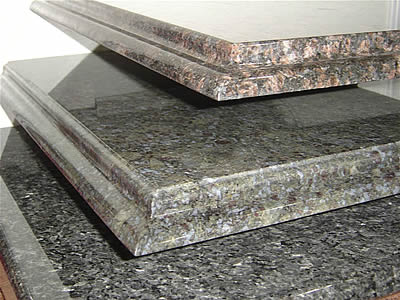
Granite Countertop Choices

Granite Countertop Choices

Let’s Start with the Granite Look for Kitchen Countertops

Updating the kitchen is probably the costliest project on most home owners’ lists. If it’s not in the budget, we hear all about the quick fixes you can do in your kitchen.

Updating the kitchen is probably the costliest project on most home owners’ lists. If it’s not in the budget, we hear all about the quick fixes you can do in your kitchen. Paint the walls! Update the hardware! Buy a new faucet! But if you’ve lived in a kitchen with yellow laminate countertops before (guilty) then you know sometimes it’s those big, expensive fixes that even paint and a new light fixture can’t solve.
But, thanks to CasaSugar.com, we’ve found this neat new product, Countertop Transformations from Rust-Oleum, which offers an affordable DIY solution. It’s a coating system to give your laminate countertops the look of natural stone products, like granite. Check out some of these before and after pictures. Though this project can be done in a weekend, it’s not your typical $20 bottle of spray paint, but instead comes with a full kit (tools included) that costs $250–still much cheaper than new granite countertops.

Before you commit to it, check out CasaSugar’s test run, which has great detail and gives it high marks. But in a nutshell, here’s how it works:

  • You’ll first scuff up your counter surface with the kit’s sanding tool.
  • Next, using a roller brush, you’ll apply the adhesive base coat.
  • Then you’ll spray a wetting agent onto the counters to keep the surface wet for the rotary chip dispenser, a nifty little tool that scatters decorative chips that will give the counters that stone look.
  • When you’re done scattering the chips, you’ll use a scraping tool to remove any excess, and then sand the surface again with a provided tool until your counters are nice and smooth.
  • Then you’ll run a wet rag over everything before applying the protective top coat, and ta-da! Your counters will be ready to use in 48 hours.

TIP from CasaSugar: If you want to replace your sink, now is a good time. It’s hard to get an even edge if you try to install one after.

By: Laura Serino

Published: April 4, 2011


Posted in 2010 Mid Year Denver Market Watch, Buying or Selling Real Estate, Centennial, Cherry Hills Village, Colorado, Denver, Denver Housing, Denver Residential Real Estate, Greenwood Village | Tagged | Leave a comment

Super Joe Hubert Is Back With A March/1st Quarter 2011 Denver Market Update

Super Joe Hubert

Super Joe Hubert

Straight From Joe:

Listed below are Real Estate Market Update links for March, 2011 and a PDF attachment of likely MLS areas for DTC sales offices. Incrementally, I have enclosed a 1st Quarter chart comparing 1Q 2010 to 1Q 2011. Please keep in mind, last March was the final month for the “First Time Home Buyer” tax credit, so some of these comparisons may not be a true view.

As a quick recap, March, 2011 combined MLS Residential Statistics had the following changes compared to March of 2010.

  • Decrease in the Number of Closed Sales down 9.8%, to 2,527
  • Average Days on Market increased to 117 days
  • Number of Active Listings decreased 8.5% to 13,712
  • Absorption Rate increased to 5.3 months (up 5.6%)
  • Average Sold Price was virtually flat ( from $274,950 to $273,877)

For more details on the combined MLS Residential Statistics, select the first link below titled “Total MLS” or feel free to contact me if you have any questions.

Sincerely,

Joe Hubert

Total MLS
All Metrolist Areas as one download
Aurora North (AUN)
Aurora South ( AUS)
Brighton, Fort Lupton (BFL)
Broomfield (BRM)
Douglas County West (DCW)
Douglas Elbert Parker (DEP)
Douglas Highlands Ranch Lone Tree (DHL)
Denver Northeast (DNE)
Denver Northwest (DNW)
Denver Southeast (DSE)
Denver Southwest (DSW)
Downtown Denver (DTD)
East Suburban North (ESN)
East Suburban South (ESS)
Jefferson County Central (JFC)
Jefferson County North (JFN)
Jefferson County South (JFS)
Jefferson County West (JFW)
Jefferson County Northcentral (JNC)
Jefferson County Southcentral (JSC)
Lafayette (LAF)

Posted in 2010 Mid Year Denver Market Watch, Buying or Selling Real Estate, Centennial, Cherry Hills Village, Colorado, Denver, Denver Housing, Denver Residential Real Estate, Greenwood Village | Tagged , | 1 Comment

Universal Design For Old and Young Alike – Aging in Place

Aging in Place

Aging in Place

Is your home going to be friendly to you as you drift into the more experienced portion of your life? One of my favorite HouseLogic slideshows showcases beautiful ways to incorporate universal design into your home.

When we created it, we keyed into the concept of aging in place, a trend I’m happy to see is growing—especially after I read a post about kid-friendly bathrooms at one of my favorite parenting blogs, Parent Hacks.

Here’s the epiphany: Universal and aging-in-place design also helps families with small children.

Parent Hacks’ list of how to make your bathroom kid-friendly overlaps greatly with universal design. Here’s one nugget I’ve embraced:

“Consider adding a hand shower. Not only are hand showers great for rinsing shampoo off little heads, they’re less intimidating for older kids transitioning from baths to showers.”

So if you’re not ready to think about aging in place, but you’ve got small children, it makes sense to pay attention to universal design features.

What kid-friendly household hacks have you found?

By: Liz Foreman

Published: April 8, 2011


Posted in 2010 Mid Year Denver Market Watch, Buying or Selling Real Estate, Centennial, Cherry Hills Village, Colorado, Denver, Denver Housing, Denver Residential Real Estate, Greenwood Village | Tagged | 2 Comments