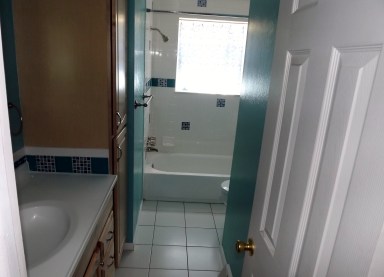
5 Essential Questions to Ask Before Hiring a Contractor

Questions To Ask Before You Hire A Contractor

You’re ready to remodel but you want to make sure you get the best contractor for the job. Here’s what to ask the candidates before you decide.

1. Would you please itemize your bid?

Many contractors prefer to give you a single, bottom-line price for your project, but this puts you in the dark about what they’re charging for each aspect of the job. For example, let’s say the original plan calls for beadboard wainscot in your bathroom, but you decide not to install it after all. How much should you be credited for eliminating that work? With a single bottom-line price, you have no way to know.

On the other hand, if you get an itemized bid, it’ll show the costs for all of the various elements of the job—demolition, framing, plumbing, electrical, tile, fixtures, and so forth. That makes it easier to compare different contractors’ prices and see where the discrepancies are. If you need to cut the project costs, you can easily assess your options. Plus, an itemized bid becomes valuable documentation about the exact scope of the project, which may eliminate disputes later.

The contractor shouldn’t give you a hard time about itemizing his bid. He has to figure out his total price line by line anyway, so you’re not asking him to do more work, only to share the details. If he resists, it means he wants to withhold important information about his bid—a red flag for sure.

2. Is your bid an estimate or a fixed price?

Homeowners generally assume that the bid they’re seeing is a fixed price, but some contractors treat their proposals as estimates, meaning bills could wind up being higher in the end. If he calls it an estimate, request a fixed price bid instead. If he says he can’t offer a fixed price because there are too many unknowns about the job, then eliminate the unknowns.

“Have him open up a wall to check the structure he’s unsure about or go back to your architect and solidify the design plans,” says Tampa, Fla., attorney George Meyer, who is chair-elect of the American Bar Association’s Forum on the Construction Industry. If you simply cannot resolve the unknowns he’s concerned about, have the project specs describe what he expects to do—and if he needs to do additional work later, you can do achange order (a written mini-bid for new work).

3. How long have you been doing business in this town?

A contractor who’s been plying his trade locally for 5 or 10 years has an established network of subcontractors and suppliers in the area and a local reputation to uphold. That makes him a safer bet than a contractor who’s either new to the business or new to the area—or who’s planning to commute to your job from 50 miles away.

You want to see a nearby address (not a PO box) on his business card—and should ask him to include one or two of his earliest clients on your list of references. This will help you verify that he hasn’t just recently hung his shingle—and will give you perspective from a homeowner who has lived with the contractor’s work for years. After all, the test of a quality job, whether it’s a bluestone patio or a family room addition, is how well it stands the test of time.

4. Who are your main suppliers?

You’ve found a few potential contractors, you’ve talked to the happy former clients on each of their reference lists, now it’s time for one additional bit of homework: talking to their primary suppliers. There’s no better reference for a tile setter, for example, than his preferred tile shop; for a general contractor than his favorite lumberyard or home center pro desk; for a plumber than the kitchen and bath showroom where he’s on a first name basis.

The proprietors of these shops know a contractor’s professional reputation, whether he has left a trail of unhappy customers in his wake, if he’s reliable about paying his bills—and whether he’s someone you’ll want to hire. The contractor should have absolutely no qualms about telling you where he gets his materials, as long as he’s an upstanding customer.

5. I’d like to meet the job foreman—can you take me to a project he’s running?

Many contractors don’t actually swing hammers. They spend their days bidding new work and managing their various jobs and workers. In some cases, the contractor you hire may not visit the jobsite every day—or may not even show himself again after you’ve signed the contract. So the job foreman—the one who’s working on your project every day—is actually the most important member of your team.

Meeting him in person and seeing a job that he’s running should give you a feel for whether he’s someone you want managing your project. Plus, it gives the general contractor an incentive to assign you one of his better crews since you’re more likely to hire him if you see his A Team. If the contractor says he’ll be running the job himself, ask whether he’ll be there every day. Again, he’ll want to give you a positive response—something you can hold him to later on.

The subtleties of how to hire a contractor

It’s not only the answers to these questions that will help you judge potential contractors—it’s the way they answer them. Were they easy to talk to and forthcoming with details or did they hem and haw and make you ask more than once? Difficulty communicating now means difficulty communicating on the job later. But clear, timely and thoughtful responses—combined with terrific references, great completed work that you’ve seen, and a smart take on your project—may mean you’ve found the right pro for your job.

Let’s thank Oliver Marks Published: September 30, 2009 for this valuable information.

Posted in Buying or Selling Real Estate, Denver, Denver Housing, Denver Residential Real Estate, Greenwood Village | Tagged , , , , , , , | Leave a comment

Denver Area Foreclosure List

Foreclosure StreetHere is this week’s foreclosure list, please click on the date for the report.

This is a list of all homeowners who have had a Notice of Election and Demand (NED) filed on their home in the last week. These properties are in the initial stage of foreclosure. For past weeks lists please scroll down to the end.


Current Week Foreclosure List: 

January 11, 2013 in Excel
January 11, 2013 in PDF

Other Foreclosure Resources:

Foreclosure Timeline
Foreclosures in Colorado
Basics of a Short Sale Transaction

Past Foreclosure Lists:

January 4, 2013 in Excel
January 4, 2013 in PDF

December 28, 2012 in Excel
December 28, 2012 in PDF

December 21, 2012 in Excel
December 21, 2012 in PDF

December 14, 2012 in Excel
December 14, 2012 in PDF

Posted in Uncategorized | Leave a comment

Denver Market Watch Residential Highlights for Year End 2012

MyTownCryer's World

MyTownCryer’s World

Residential Highlights:

  • 7.7% increase in the number of closed sales year-over-year (194)
  • 18.2% increase in the number of closed sales year to date (5727)
  • 29.9% decrease in average days on market (75)
  • 28.1% decrease in number of active listings
  • 14.5% increase in average price – sold ($315,451)

Condo Highlights:

  • 14.9% increase in number of closes sales year-over-year (1185)
  • 36.8% decrease in average days on market (67)
  • 37.4% decrease in number of active listings
  • 12.3% increase in average price – sold ($186,877)

Click here for Full report of entire MLS

For individual MLS area reports, please scroll to the bottom of the eNewsletter.

Posted in Buying or Selling Real Estate, Centennial, Cherry Hills Village, Colorado, Denver, Denver Housing, Denver Residential Real Estate, Greenwood Village | Tagged , , , , , , , | Leave a comment

7 Smart Strategies for Bathroom Remodeling

BathroomHere’s how to get the bathroom of your dreams without making your budget a nightmare.

A mid-range bathroom remodel is a solid investment, according to Remodeling Magazine’s annual Cost vs. Value Report. An average bath remodel of $16,500 will recoup about 62% of those costs when it’s time to sell your home, and a more extensive $52,200 job returns about 55.5%. In addition, you can maximize the value of your investment by using these smart strategies, which will create a stylish yet budget-friendly bathroom.

1. Stick to a plan

A bathroom remodel is no place for improvisation. Before ripping out the first tile, think hard about how you will use the space, what materials and fixtures you want, and how much you’re willing to spend.

The National Kitchen and Bath Association (NKBA) recommends spending up to six months evaluating and planning before beginning work. That way, you have a roadmap that will guide decisions, even the ones made under remodeling stress. Once work has begun—a process that averages 2 to 3 months—resist changing your mind. Work stoppages and alterations add costs. Some contractors include clauses in their contracts that specify premium prices for changing original plans.

If planning isn’t your strong suit, hire a designer. In addition to adding style and efficiency, a professional designer makes sure contractors and installers are scheduled in an orderly fashion. A pro charges $100 to $200 per hour, and spends 10 to 30 hours on a bathroom project.

2. Keep the same footprint

You can afford that Italian tile you love if you can live with the total square footage you already have.

Keeping the same footprint, and locating new plumbing fixtures near existing plumbing pipes, saves demolition and reconstruction dollars. You’ll also cut down on the dust and debris that make remodeling so hard to live with.

Make the most of the space you have. Glass doors on showers and tubs open up the area. A pedestal sink takes up less room than a vanity. If you miss the storage, replace a mirror with a deep medicine cabinet.

3. Make lighting a priority

Multiple shower heads and radiant heat floors are fabulous adds to a bathroom remodel. But few items make a bathroom more satisfying than lighting designed for everyday grooming. You can install lighting for a fraction of the cost of pricier amenities.

Well-designed bathroom task lighting surrounds vanity mirrors and eliminates shadows on faces: You look better already. The scheme includes two ceiling- or soffit-mounted fixtures with 60 to 75 watts each, and side fixtures or sconces providing at least 150 watts each, distributed vertically across 24 inches (to account for people of various heights). Four-bulb lighting fixtures work well for side lighting.

4. Clear the air

Bathroom ventilation systems may be out of sight, but they shouldn’t be out of mind during a bathroom remodel.

Bathroom ventilation is essential for removing excess humidity that fogs mirrors, makesbathroom floors slippery, and contributes to the growth of mildew and mold. Controlling mold and humidity is especially important for maintaining healthy indoor air quality and protecting the value of your home—mold remediation is expensive, and excess humidity can damage cabinets and painted finishes.

A bathroom vent and water closet fan should exhaust air to the outside—not simply to the space between ceiling joists. Better models have whisper-quiet exhaust fans and humidity-controlled switches that activate when a sensor detects excess moisture in the air.

5. Think storage

Bathroom storage is a challenge: By the time you’ve installed the toilet, shower, and sink, there’s often little space left to store towels, toilet paper, and hair and body products. Here are some ways to find storage in hidden places.

  • Think vertically: Upper wall space in a bathroom is often underused. Freestanding, multi-tiered shelf units designed to fit over toilet tanks turn unused wall area into found storage.Spaces between wall studs create attractive and useful niches for holding soaps and toiletries. Install shelves over towel bars to use blank wall space.
  • Think moveable: Inexpensive woven baskets set on the floor are stylish towel holders. A floor-stand coat rack holds wet towels, bath robes, and clothes.
  • Think utility: Adding a slide-out tray to vanity cabinet compartments provides full access to stored items and prevents lesser-used items from being lost or forgotten.

6. Contribute sweat equity

Shave labor costs by doing some work yourself. Tell your contractor which projects you’ll handle, so there are no misunderstandings later.

Some easy DIY projects:

  • Install window and baseboard trim; save $250.
  • Paint walls and trim, 200 sq.ft.; save $200.
  • Install toilet; save $150.
  • Install towel bars and shelves; save $20 each.

7. Choose low-cost design for high visual impact

A “soft scheme” adds visual zest to your bathroom, but doesn’t create a one-of-a-kind look that might scare away future buyers.

Soft schemes employ neutral colors for permanent fixtures and surfaces, then add pizzazz with items that are easily changed, such as shower curtains, window treatments, towels, throw rugs, and wall colors. These relatively low-cost decorative touches provide tons of personality but are easy to redo whenever you want.

Let’s thank John Riha Published: March 4, 2011 for this valuable information!

Posted in Buying or Selling Real Estate, Centennial, Cherry Hills Village, Colorado, Denver, Denver Housing, Denver Residential Real Estate, Greenwood Village | Tagged , , , , , , , | Leave a comment

Kitchen Countertops

Kitchen Countertops

How to Save 20% to 40% on Your Kitchen Remodel Without Even Trying

You can picture your new, beautifully renovated dream kitchen. But your budget won’t allow it unless you cut costs. Here’s how to save on your kitchen remodel.

Below are 7 great recommendations for ways to shave costs off your kitchen remodel. Each recommendation includes a percentage of the savings you can expect to trim off the overall cost of your kitchen remodeling. Because of variables, such as the price of materials in your area, the percentages are given as a range.

If you do all the recommendations, you’ll knock 20% to 40% off the cost of your project.

1. Skip the custom cabinet shop. All of the major cabinet manufacturers offer a range of styles and finishes in their stock product lines. The only compromise you’ll make is that you can’t get cabinet widths sized to the exact fraction of an inch.

“Stock cabinets come in 3-inch increments, so you may need to get something slightly smaller than the space you have to fill,” says Cambridge, Mass., kitchen designer Jean Courtney. But nobody will ever notice. “Your contractor will use matching filler pieces and moldings to hide any gaps and make everything look custom fitted.”

Your savings: 5% to 12%

2. Keep the sink and appliances in their current locations. That avoids having to run new electrical wiring, natural gas lines, plumbing pipes, and hood-vent lines, knocking thousands off your construction costs.

Your savings: 5% to 10%

3. Select a simple cabinet door design. A classic shaker door, which is plain and elegant, comes at about half the cost of something more complex, such as an arch-top panel with intricate moldings. And you’ll get a more timeless, never-go-out-of-style look.

Your savings: 2% to 4%

4. Choose a stock stain or paint finish on the cabinets instead of a trendy two-tone glazed finish. Most cabinet manufacturers offer an array of good-looking, durable stock finishes.

Your savings: 3% to 4%

5. Keep the existing window locations. Using the current openings — and resisting the temptation to increase window size — reduces construction costs considerably because the contractor won’t have to frame out new openings.

Your savings: 3% to 6%

6. Simplify the edge profile of your countertops. A waterfall, ogee, or other fancy edge choice can add hundreds to the fabrication costs of your countertops. Trim that cost by opting for a square or simple round-over treatment.

Your savings: 1% to 2%

7. Shop for discontinued hardwood flooring and backsplash tiles. “When a particular line of subway tile or oak flooring is going out of production, stores slash the prices to move the merchandise — but it’s perfectly good stuff,” says Courtney.

Another option: Look for salvaged building materials, such as sinks, faucets, and lighting fixtures.

Your savings: 1% to 2%

Let’s thank Oliver Marks Published: September 11, 2012 for this valuable information!

Posted in Buying or Selling Real Estate, Denver, Denver Residential Real Estate | Tagged , , , , , , , | Leave a comment

How to Get Rid of Stuff and Declutter Your Life

You can get that warm, fuzzy holiday feeling and make a few bucks by responsibly ditching all the excess stuff you accumulate, particularly at this time of year.

 Before you cast off, sort out 

This video by home organizer Alejandra Costello demonstrates her system for organizing items you wish to donate, sell, return, or exchange. You designate an area in the home — preferably near an exit — for the stuff you don’t want to forget to take out the door with you. What we really liked best about this video is that she includes tips for keeping your downsizing efforts on track.

Hazardous household materials

Sure, we all know where to recycle stuff like soda cans and water bottles, but what about dicey items like medications, paint thinners, or asbestos?

Earth911.com, along with its free app iRecycle, is one of the best sources for finding acceptance centers that handle household hazardous waste. Just enter the type of junk you need to unload, like compact fluorescent light bulbs (did you know they have traces of mercury?), along with your ZIP code, and it provides the nearest recycling center to you.

Learn more about stuff that’s considered household hazardous waste, by watching this
hilarious Canadian video made for the city of Toronto.

Old technology

If you want to recycle appliances, cameras, computers, and TVs, Best Buy Recycle will take them, no matter where you bought them originally. The retailer charges $100 to pick up old appliances like TVs if you’re not also having a new Best Buy item delivered to you. It says it destroys CPUs to protect your data privacy. And the recycled bits and pieces become raw materials manufacturers can use to make everything from appliances to park benches. Check out the video:

Watch live streaming video from thebby at livestream.com

New-ish technology

If you want to sell your current smartphone or Mac gadget quickly, Gazelle.com will give you an instant estimate and a free shipping label. Plus, you can take comfort knowing that Gazelle believes in reusing products first before trying to recycle them.

FYI, while the company does protect your privacy by destroying SIM cards and erasing personal data found on devices they receive, Gazelle recommends you remove your SIM card and delete any personal information on your device before sending it in.

Junk mail

The best way to get rid of junk mail from accumulating at home is to stop it from being delivered in the first place. By creating a free account at Catalogchoice.org, you can banish catalogs and assorted marketing items from your home forever. Plus, their MailStop Browser extension for Firefox lets you opt out of mailing lists in real time when you shop online.

Lastly, if you’re willing to pay $35 a year, CatalogChoice will also prevent data brokers from selling your info to other direct marketers. You can check out the endorsement the National Wildlife Federation gave this service.

Kids’ stuff

We all know how quickly kids outgrow their stuff. Once Upon a Child buys gently used clothing, toys, and baby gear. It won’t accept items that have been recalled or don’t meet their safety standards. To find a store location near you so you can swap your items for cash or trade for things your kid currently needs, visit their website.

Books 

Discover Books matches second-hand books with people who want them. It uses a proprietary software system to try to find a new owner for your old reads through an online retailer, or tries to donate it to an organization that supports literacy. Plus, if Discover Books can’t find a book a new home, it’s sent to a recycling center to begin a fresh life as something else. To see how this organization supports children’s literacy efforts, check out this video.

Places that buy books outright other than textbooks are becoming increasingly rare. Cash 4 Books pays you for books it wants, plus covers the cost of shipping to their distribution center. Just go to their site and type in the ISBN numbers of the books you plan to sell. Check out the video here to see how this process works.

FYI, if you really want to cut down on your carbon footprint, try donating your books to local libraries, schools, and hospitals. Or build your own free library in your front yard and let passersby help themselves.

Household linens, cleaning supplies, and old cars

If you have old towels, blankets, heating pads, cleaning supplies, and even a car you need to get rid of, consider donating to a local animal shelter like the ASPCA. Every shelter has different needs, from canned dog food to office supplies. But the items we listed are often animal rescue organizations’ top need. To find a local shelter near you, go to the ASPCA site.

Do you need a kick in the pants in order to donate? Check out this happy ending in this video:

Additional ways to part with your stuff

Donate, trade, or sell: Krrb.com is an alterative to sites like eBay, Craigslist, andFreecycle. Krrb makes it fairly simple to buy, sell, rent, trade, or even give your stuff away. Plus, the site offers a republish function that reposts your listings from Etsy, Craigslist, or eBay to Krrb with one click. They also have an iPhone app so you can find stuff for sale right in your neighborhood:

Krrbin’ On The Go – Our Editors Take A Spin On The Krrb iPhone App from Krrb on Vimeo.

Charity thrift shop locator: TheThriftShopper.com makes it a cinch to find charity thrift stores in your area by entering your ZIP code. Plus, many of the listings include the shop’s website, so you can learn more about each organization before deciding where to donate.

Let’s thank Deirdre Sullivan  Published: November 13, 2012 for this valuable information.

Posted in Buying or Selling Real Estate, Denver, Denver Housing, Denver Residential Real Estate | Tagged , , , , , , , | 1 Comment

A Financial Plan for Your Home

Your Home - Your InvestmentYour home is probably your biggest investment. To manage it, create a financial plan that takes into account repairs, upgrades, mortgages, insurance, and taxes.

Use our home financial plan budget worksheet, and start by writing a list of expenses, such as:

  • Mortgage
  • Voluntary upgrades, such as a swimming pool, a premium range, a new powder room

What will you learn from this home financial plan weekend exercise?

  • How much you have to spend
  • How much you need to allot in the short- and long-term for necessary maintenance and voluntary improvements

With this newfound grip on your home’s expenses, you can create a home financial plan that’ll help you there for years with maximum enjoyment and minimum anxiety.

Other aspects to manage:

The mortgage: Pay it — and then some
Insurance: Protect your property
Repairs and renovations: By choice or necessity
Taxes: (Almost) no way around them

The mortgage: Pay it—and then some

Yup, you already shell out a lot for your mortgage, but can you pay more? Even a little extra each month can add up to an earlier payoff. Let’s say you have $200,000 in outstanding principal and a 20-year fixed-rate mortgage at 5%. Your monthly payment is $1,319.91. But if you can manage to pay another $100 a month, you’ll save $14,887 in interest.

Run the numbers yourself for your home financial plan.

Advantages of an early payoff, says Alan D. Kahn, a financial planner in Syosset, N.Y.:

  • Less debt means more money to spend later.
  • It feels darn good to own your house outright as soon as possible.
  • Minimal tax loss. Toward the tail end of the life of a loan most of your payment goes to the principal, not the interest, so you’re getting only a small tax break anyway.

Of course, if you’re still saving for retirement, put the 100 bucks elsewhere:

  • A retirement plan
  • An account for the inevitable home repairs
  • An account for discretionary improvements, which can raise your home’s value

Insurance: Protect your property

Your vegetable garden is pointless without a fence to keep out rabbits; likewise, your home financial plan will come to nothing without an insurance “fence”:

Homeowner’s insurance. Basic coverage for your home and everything in it. The average cost is $636 per year but this varies widely by state.

Liability coverage. Protects you from a lawsuit if someone gets hurt on your property, for example. Your best bet: An umbrella policy.  For about $300 a year you can by a typical $1 million policy.

Various disaster insurance policies. Optional policies cover flood, earthquake, and hurricane damage. As part of your home financial plan, you have to research to see what disaster coverage, if any, you need in your area, and what your standard policy already covers. For $540 a year you can buy flood insurance, for example.

Don’t under- or overbuy insurance

For your basic policy, get homeowners insurance with full replacement coverage in case your house burns to the ground.

That sounds simple, but heads up on calculation. Remember that you own a house as well as the land on which it sits. So even though you bought your home for $300,000, it may cost only $100,000 to rebuild it. Your policy limits should reflect this. This difference will vary widely by region.

Another heads up: Don’t make the common and potentially disastrous mistake of thinking that because your home has fallen in value you need less insurance. If you bought a $1.2 million townhouse in Florida during the boom, it’s true it now may only sell for $600,000. But the replacement cost of the townhouse hasn’t changed much, so you can’t improve your home financial plan by cutting insurance costs that way.

Other ways to cut your insurance budget:

  • If you make structural improvements, such as adding storm shutters, your insurer may give you a break.
  • If you belong to certain groups, such as AARP or veterans’ organizations, your premiums may be lower.

Repairs and renovations: By choice or necessity

You own a home, so you’ll be spending money on everything from a new faucet to — surprise! — a new roof. Freddie Mac and other authorities say as part of your home financial plan, you should be prepared to spend 1% to 3% of the market value of the home annually on maintenance. To be extra-prudent, open a savings account and make regular payments until your account reaches 1% to 3% of your home’s current value.

To help you budget:

Start with the inspection report you received when you bought the house. Did the inspector indicate that you would need a new roof in five years? A new furnace in 10?

Keep a log of your major appliances’ age so you can estimate when they’ll need replacing. Some estimated life spans:

  • Roof: 20-25 years
  • Heating systems: 15-20 years
  • Range/ovens: 11-15 years
  • Water heaters: 8-13 years

Then get estimates on what replacements will cost and start saving.

Consider ongoing non-emergency maintenance, too. Do you live in New England? Price a snow blower and get bids from plow services.

Resist the siren call of the home equity loan to take care of everything. That just defeats your efforts to pay off the mortgage early.

Separate out what you want from what you need. Does it make more sense to do a $50,000 to $60,000 kitchen remodel, which recoups about 69%, or a minor remodel, which recoups about 75%, according to Remodeling magazine’s 2013 Cost vs. Value Report?

If you can afford to redo, go for it. Just don’t confuse your necessary repairs (new oil furnace — about $4,000) with your discretionary upgrades (Viking range — $6,000 and up).

Taxes: (Almost) no way around them

Even if your lender handles your property taxes from an escrow account, you need to budget for them in your home financial plan. They creep up almost every year, it seems. Take responsibility for tracking the changes in your area: Look over past tax bills to get a sense of how quickly they’ve risen in the past.

Or if your lender handles escrow and you haven’t saved your bills, ask for an accounting. The median annual property tax payment is $1,812, but that hides the enormous range in medians from state to state.

You can generally deduct property taxes on your federal return. A tax pro can tell you how much of a tax break you’ll get, to help you fine tune your home financial plan.

You may be able to reduce your tax burden by getting a reassessment. Do your homework first: Are comparable houses taxed less than yours? Ask the local assessor what formula is used to set tax rates. You can challenge the assessed value and get yourself a rollback.

If you’re in a special group, you might get some help from state or local programs. Check around to see what’s available in your area. New York State, for example, has its Star Program for giving senior citizens some relief from school-related property taxes.

Let’s thank Richard Koreto  Published: December 31, 2012 for this valuable information.

Posted in Denver, Denver Housing, Denver Real Estate, Denver Residential Real Estate | Tagged , , , , , , , | Leave a comment

Denver Area Luxury Home Sales for 2012

Floor Plans and Map

Floor Plans and Map

During the course of 2012, the Denver Metro Area had 17 transactions over $5M.  The overwhelming majority of them took place in Denver and Cherry Hills Village, but it is always interesting where the others occurred.

The attached file provides images and details statistical reference points at the end.  Answering the questions Who, What, Where and possibly even Why!  Enjoy!

17 Sales Over $5M in Denver Metro for 2012

Posted in Buying or Selling Real Estate, Cherry Hills Village, Denver Residential Real Estate, Greenwood Village | Tagged , , , , , , , | Leave a comment

MyTownCryer 2012 in Review

The WordPress.com stats helper monkeys prepared a 2012 annual report for this blog.

Here’s an excerpt:

4,329 films were submitted to the 2012 Cannes Film Festival. This blog had 21,000 views in 2012. If each view were a film, this blog would power 5 Film Festivals

Click here to see the complete report.

Posted in Buying or Selling Real Estate, Centennial, Cherry Hills Village, Colorado, Denver, Denver Housing, Denver Residential Real Estate, Greenwood Village, Highlands Ranch | Tagged , , , , , , , | Leave a comment

Real Estate Data, News, and Market Analysis Tools from Super Joe Hubert

Super Joe Hubert

Super Joe Hubert

Land Title’s Joe Hubert has offered up some year end and late December Market Data to offer some insight on the events to come in 2013.  Thanks Joe!

Hi Tom,I am amazed that December has arrived already, and I wish you and yours a very happy holiday!This month’s eNewsletter is on the lighter side, but I hope you’ll find the information valuable.

And as you get ready to begin business planning for next year, please don’t hesitate to call me. I am happy to assist you with your marketing and have lots of tools to help you grow your business in the coming year.

Sincerely,
Joe

November – 2012 Real Estate Market Update

Entire MLS (All Areas)

Residential Highlights:

  • 20.5% increase in the number of closed sales year-over-year (2,975)
  • 19.1% increase in the number of closed sales year to date (34,439)
  • 27.3% decrease in average days on market (72)
  • 28.2% decrease in number of active listings
  • 11.2% increase in average price – sold ($206,773)

Condo Highlights:

  • 19.5% increase in number of closes sales year-over-year (717)
  • 39.0% decrease in average days on market (64)
  • 37.6% decrease in number of active listings (1,511)
  • 29.0% increase in average price – sold ($198,080)
  • Click here for Full report of entire MLS

For individual MLS area reports, please scroll to the bottom of the eNewsletter.

In the News

For a compilation of timely articles that highlight the upside of the economy in today’s challenging market, check out this month’s In the News.

Click here for a PDF version.

Topic of the Month – Property Taxes

This month’s Topic is our traditional piece about how 2012 Property Taxes affect your 2013 Closings. We hope you find it useful, especially for your first few transactions of 2013.

Click here to download article

Referral Marketing – Winter Mountain Events

This month’s Referral Marketing mailer details upcoming Winter Mountain Events (especially good for non-skiers).

Our Word document mailer is is ready for you to personalize, print and send to your sphere. Or, download our JPG to email to your clients. You can also visit Land Title’s Facebook page, where you can click “share” to post to your own page.

Click here for this month’s Referral Marketing mailer 2-to-a-page in Word.
Click here for this month’s Referral Marketing mailer as a JPG.

For archives of past referral marketing mailers, articles by our sales reps, and even more information to help you with your marketing, be sure to check out LandTitleMarketingSolutions.com.
MLS All Areas:


All Areas in one consolidated report
Aurora North – AUN
Aurora South – AUS
Brighton, Fort Lupton – BFL
Broomfield – BRM
Denver Northeast – DNE
Denver Northwest – DNW
Denver Southeast – DSE
Denver Southwest – DSW
Downtown Denver – DTD
Douglas County West – DCW
(Includes – Castle Rock, Larkspur, Sedalia, Palmer Lake, part of Littleton)
Douglas Elbert Parker – DEP
(Includes – Parker, Elizabeth, Franktown, Kiowa, Elbert, Deer Trail, Simla)
Douglas Highlands Ranch Lone Tree – DHL
(Includes – Highlands Ranch, Lone Tree)
East Suburban North – ESN
East Suburban South – ESS
Jefferson County Central – JFC
Jefferson County North – JFN
Jefferson County Northcentral – JNC
Jefferson County South – JFS
Jefferson County Southcentral – JSC
Jefferson County West – JFW
Lafayette – LAF
Mountain Clear Creek – MCC
Mountain Conifer Pine – MCP
Mountain Evergreen North – MEN
Mountain Evergreen South – MES
Mountain Gilpin County – MGC
Mountain Jefferson County – MJC
Mountain Jefferson North – MJN
Mountain Jefferson South – MJS
Mountain Park County – MPC
Mountain Park East – MPE
North Northeast Suburban – NNE
North Northwest Suburban – NNW
North Suburban Central – NSC
North Suburban East – NSE
North Suburban West – NSW
South Suburban Central – SSC
South Suburban East – SSE

Based on Information from Metrolist, Inc. for the period Jan 2009 through present. Note: This representation is based in whole or in part on data supplied by Metrolist, Inc. Metrolist, Inc. does not guarantee nor is in any way responsible for its accuracy. Data maintained by metrolist, Inc. may not reflect all real estate activity in the market.

Forward to a Friend

Joe Hubert
JHubert@ltgc.com
303-550-7989

Copyright © 2012 Land Title Guarantee Company, All rights reserved.
You are receiving this email because you are a valued customer of Land Title Guarantee Company.
Sent to tcryer@kentwoodco.comwhy did I get this?
unsubscribe from this list | update subscription preferences
Land Title Guarantee Company · 3033 East 1st Ave., Suite 600 · Denver, CO 80206
Posted in Buying or Selling Real Estate, Centennial, Cherry Hills Village, Colorado, Denver, Denver Housing, Denver Residential Real Estate, Greenwood Village | Tagged , , , , , , , , , | Leave a comment