

You Can Compost Right in You Own Backyard!

Composting for your Garden

Composting for your Garden

Why don’t we all do this?  Does it take too much time?  Is it just a nasty mess?  Does it take too much space?  These and many more answers to follow.  Composting has a future, and a rich past!

Save money and grow healthier plants by recycling yard and kitchen waste into nutrient-rich compost.

Making backyard compost even has a civic benefit because it saves landfill space, helping to keep garbage-processing costs lower for you and your neighbors.
You can make compost without spending a penny, or you can buy simple equipment that looks tidier and speeds up the transformation process. Whichever approach you take, you’ll need to understand a few key principles of composting.

How compost happens

Left alone in a natural habitat, plants create their own compost. Leaves, twigs, and overripe fruit fall to the ground and slowly get broken down into nutrients. You can make this same process happen in an out-of-the-way spot with a compost pile—and distribute the results by sprinkling the compost over planting beds as fertilizer, dropping it into the hole before you set a vegetable plant in the ground, or even using it as mulch.

There are two main ways to compost: You can use only yard waste—or add kitchen waste, too.

Yard waste composting

If you’re composting only yard waste, an open pile is all you need. For the richest, fastest results, alternate layers of green (nitrogen-rich) plant material, such as lawn clippings and plant cuttings, with brown (carbon-rich) material, such as dry leaves. Make the layers approximately equal or add a little more browns than greens.

Cut branches and stems down to 3 to 6 inches long—and skip any that are more than ½ inch thick—unless you’re willing to sift out remaining chunks when you use the compost. Moisten the materials with a garden hose as you add them so they are about as damp as a wrung-out sponge.

If a pile of dead plants would look too messy for your yard, corral the trimmings in a compost bin. You can buy one, but first contact your local solid-waste disposal company or municipal service to ask whether it offers a subsidy for buying a composter—or perhaps even gives them away free.

The Concord Compost Bin, which consists of top and bottom lids and a side wrapping made of flexible plastic perforated with holes, sells as for about $100 to $175, depending on capacity, at composters.com. Or you can make your own from wood and wire mesh following instructions from Seattle Tilth or Lowe’s.

You can make “hot compost” or “cold compost.” Hot composting works faster (usually in three to six months) and kills most weed seeds. But you need to build the whole pile at once and turn it with a pitchfork every month or so to ensure that the stuff at the edges has a turn in the center and vice versa.

For cold composting, you just layer on the materials as you collect them, add water as needed to keep the pile damp, and let nature do the rest. It might look like nothing is happening, but after six to 12 months, when you remove the relatively unchanged top layer, you’ll find compost underneath. You can tell it’s ready if it looks like dark black soil, with no sign of its original form remaining.

With either system, having two bins makes the job easier because you can scoop the contents of one into the other to turn a hot pile, for example, or to expose the compost under a cold pile. Three bins are even better because you can store finished compost in one while you’re working on a new batch in the other two.

Adding food waste

Kitchen scraps are high in nitrogen, so adding them to your compost speeds up decomposition and results in a richer material. Plus, since it counts toward your green materials, which are usually less abundant than brown ones, it allows you to create more compost.

Just don’t put food waste in an open compost pile. That would draw rats, raccoons, and other pests. To make any compost bin rodent-proof, wrap it with metal mesh, called hardware cloth, with quarter-inch openings—including the top and the bottom.

Or you can choose a tumbler-style composter, which consists of a drum that rotates on an axis, so instead of turning a pile with a pitchfork, you simply tumble the drum a few times to mix up the contents.

This system works fast, though if you want finished compost in two to four weeks, as some of their labels promise, you have to shred everything first and turn the tumbler every day or two. Tumblers are also relatively pricey—around $300 to $400 at sites such as People Powered Machines and CompostBins.com. Some large-capacity bins may cost more.

What not to compost

Never put the following into your compost:

  • Weeds, which can survive and sprout again
  • Diseased or insect infested plants, which can infect your garden plants
  • Any plant, including grass clippings if you use weed control products, which was sprayed with a pesticide
  • Dog and cat waste, which can harbor parasites and diseases
  • Meat, which stinks as it decomposes and may contain harmful bacteria that can survive composting
  • Wood ashes, which are too alkaline for some plants

Published: March 9, 2010

Jeanne Huber is a writer who specializes in home and garden topics. She composts yard waste and whatever kitchen scraps her chickens don’t relish.

 

Posted in 2010 Mid Year Denver Market Watch, Buying or Selling Real Estate, Centennial, Cherry Hills Village, Colorado, Denver, Denver Housing, Denver Residential Real Estate, Greenwood Village | Tagged | Leave a comment

A $3 Tip to Stop Squabbles About Water Usage


I Confess, I Have Wasted Water!

I Confess, I Have Wasted Water!

This story reminds me of a time or two at my own kitchen faucet.  I’ll bet you too have had a version of this conversation.

Confession time: my husband, Mason, and I have been known to squabble over the kitchen faucet. He likes to leave it running while he cleans up, while I fret about wasting water.

My HouseLogic colleague Lara tells me she was cleaning up after a dinner party when a guest scolded her for the same behavior. And my interior design friend Pam, who lives in southern California, says, “We have this ‘discussion’ often at my house. It’s usually the ones who are paying the water bill against the ones who aren’t.”

There are tech fixes large and small for this human foible. For example, I could buy a smart tap with a touch sensor or a motion detector. There are a host of handsome smart taps, priced from $150 to over $1,000, but these electronic marvels have a downside: Because they need juice from my home electrical system to run, they will be using energy to save water–not necessarily a green choice–and they won’t work during a power outage.

This choice is even less green if the problem lies not with the tap, but with the user, and that’s usually the case. (My daughter-in-law Erin says there’s just no way she’s going keep turning that tap on and off–her hands are full, for heaven’s sake.)

While a faucet with a motion sensor would solve her problem, I don’t think it’s right for me. When I choose to replace something that “ain’t broke” with something new, I’m not only junking the metal and other materials in the tap, I’m also wasting all the energy spent to manufacture and ship the tap. That’s not smart.

A better tech fix–short of turning the water off–would be to install an aerator. This handy gadget, which will fit into any faucet fitted with screw-in threads, saves water without reducing water pressure. You can buy an aerator at a hardware or home improvement store for less than $3. The flow rate you’ll achieve with it, measured in gallons per minute (gpm), will be inscribed along the side.

Does all this matter? Doesn’t the water coming out of a single kitchen faucet add up to just a drop in the ocean, metaphorically speaking? Not really. You’d be surprised at how much water our daily tasks use.

Try out this calculator the U.S. Geological Survey put together for schools. I tried it, and found that one faucet leaking 10 drips a minute wastes enough water for six baths. So imagine how much water is going down the drain while running the kitchen faucet during cleanup.

Who’s going to give Lara, Mason, Pam, and Erin the bad news?

Have you had this debate at your house? Have you solved this problem, short of recycling family members? What water saving tips or tricks do you have to share? Let’s hear from you.

By: Nicolette Toussaint

Published: April 1, 2011


Posted in 2010 Mid Year Denver Market Watch, Buying or Selling Real Estate, Centennial, Cherry Hills Village, Colorado, Denver, Denver Housing, Denver Residential Real Estate, Greenwood Village | Tagged , , , , , , , , | 1 Comment

Buyer’s Want Granite, Stainless and Closet Space!

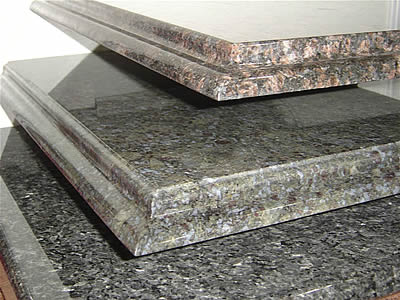
Granite Countertop Choices

Granite Countertop Choices

Let’s Start with the Granite Look for Kitchen Countertops

Updating the kitchen is probably the costliest project on most home owners’ lists. If it’s not in the budget, we hear all about the quick fixes you can do in your kitchen.

Updating the kitchen is probably the costliest project on most home owners’ lists. If it’s not in the budget, we hear all about the quick fixes you can do in your kitchen. Paint the walls! Update the hardware! Buy a new faucet! But if you’ve lived in a kitchen with yellow laminate countertops before (guilty) then you know sometimes it’s those big, expensive fixes that even paint and a new light fixture can’t solve.
But, thanks to CasaSugar.com, we’ve found this neat new product, Countertop Transformations from Rust-Oleum, which offers an affordable DIY solution. It’s a coating system to give your laminate countertops the look of natural stone products, like granite. Check out some of these before and after pictures. Though this project can be done in a weekend, it’s not your typical $20 bottle of spray paint, but instead comes with a full kit (tools included) that costs $250–still much cheaper than new granite countertops.

Before you commit to it, check out CasaSugar’s test run, which has great detail and gives it high marks. But in a nutshell, here’s how it works:

  • You’ll first scuff up your counter surface with the kit’s sanding tool.
  • Next, using a roller brush, you’ll apply the adhesive base coat.
  • Then you’ll spray a wetting agent onto the counters to keep the surface wet for the rotary chip dispenser, a nifty little tool that scatters decorative chips that will give the counters that stone look.
  • When you’re done scattering the chips, you’ll use a scraping tool to remove any excess, and then sand the surface again with a provided tool until your counters are nice and smooth.
  • Then you’ll run a wet rag over everything before applying the protective top coat, and ta-da! Your counters will be ready to use in 48 hours.

TIP from CasaSugar: If you want to replace your sink, now is a good time. It’s hard to get an even edge if you try to install one after.

By: Laura Serino

Published: April 4, 2011


Posted in 2010 Mid Year Denver Market Watch, Buying or Selling Real Estate, Centennial, Cherry Hills Village, Colorado, Denver, Denver Housing, Denver Residential Real Estate, Greenwood Village | Tagged | Leave a comment

Super Joe Hubert Is Back With A March/1st Quarter 2011 Denver Market Update

Super Joe Hubert

Super Joe Hubert

Straight From Joe:

Listed below are Real Estate Market Update links for March, 2011 and a PDF attachment of likely MLS areas for DTC sales offices. Incrementally, I have enclosed a 1st Quarter chart comparing 1Q 2010 to 1Q 2011. Please keep in mind, last March was the final month for the “First Time Home Buyer” tax credit, so some of these comparisons may not be a true view.

As a quick recap, March, 2011 combined MLS Residential Statistics had the following changes compared to March of 2010.

  • Decrease in the Number of Closed Sales down 9.8%, to 2,527
  • Average Days on Market increased to 117 days
  • Number of Active Listings decreased 8.5% to 13,712
  • Absorption Rate increased to 5.3 months (up 5.6%)
  • Average Sold Price was virtually flat ( from $274,950 to $273,877)

For more details on the combined MLS Residential Statistics, select the first link below titled “Total MLS” or feel free to contact me if you have any questions.

Sincerely,

Joe Hubert

Total MLS
All Metrolist Areas as one download
Aurora North (AUN)
Aurora South ( AUS)
Brighton, Fort Lupton (BFL)
Broomfield (BRM)
Douglas County West (DCW)
Douglas Elbert Parker (DEP)
Douglas Highlands Ranch Lone Tree (DHL)
Denver Northeast (DNE)
Denver Northwest (DNW)
Denver Southeast (DSE)
Denver Southwest (DSW)
Downtown Denver (DTD)
East Suburban North (ESN)
East Suburban South (ESS)
Jefferson County Central (JFC)
Jefferson County North (JFN)
Jefferson County South (JFS)
Jefferson County West (JFW)
Jefferson County Northcentral (JNC)
Jefferson County Southcentral (JSC)
Lafayette (LAF)

Posted in 2010 Mid Year Denver Market Watch, Buying or Selling Real Estate, Centennial, Cherry Hills Village, Colorado, Denver, Denver Housing, Denver Residential Real Estate, Greenwood Village | Tagged , | 1 Comment

Universal Design For Old and Young Alike – Aging in Place

Aging in Place

Aging in Place

Is your home going to be friendly to you as you drift into the more experienced portion of your life? One of my favorite HouseLogic slideshows showcases beautiful ways to incorporate universal design into your home.

When we created it, we keyed into the concept of aging in place, a trend I’m happy to see is growing—especially after I read a post about kid-friendly bathrooms at one of my favorite parenting blogs, Parent Hacks.

Here’s the epiphany: Universal and aging-in-place design also helps families with small children.

Parent Hacks’ list of how to make your bathroom kid-friendly overlaps greatly with universal design. Here’s one nugget I’ve embraced:

“Consider adding a hand shower. Not only are hand showers great for rinsing shampoo off little heads, they’re less intimidating for older kids transitioning from baths to showers.”

So if you’re not ready to think about aging in place, but you’ve got small children, it makes sense to pay attention to universal design features.

What kid-friendly household hacks have you found?

By: Liz Foreman

Published: April 8, 2011


Posted in 2010 Mid Year Denver Market Watch, Buying or Selling Real Estate, Centennial, Cherry Hills Village, Colorado, Denver, Denver Housing, Denver Residential Real Estate, Greenwood Village | Tagged | 2 Comments

Resale Residential Shortages Observed in the Denver Metro Market

“It’s a buyer’s market, There’s over supply, Prices are still falling and Shadow inventory will drive prices even lower.”  You’ve heard and read these headlines over the last few months, but that’s why I’m here for you.  You are going to hear it here first.  THIS MARKET HAS CHANGED.  It has changed dramatically.

Market Trend 3 Car Garage Properties

When you open this graphic two things become apparent:

  • If you want a home with a 3 car garage, up to $300K you have very few choices, particularly in spherically close neighborhoods.
  • If you want a home with a 3 car garage, up to $300K you have numerous choices if you are willing to buy in spherically distant neighborhoods.
Posted in Uncategorized | Leave a comment

Super Joe Hubert Is Back with His Denver Market Update March, 2011

Combined DTC MLS Areas

  • As a quick recap, February, 2011 combined MLS Residential Statistics had the following changes compared to February of 2010.
  • Decrease in the Number of Closed Sales to 1,770 (down 7.5%)
  • Average Days on Market increased to 123 days
  • Number of Active Listings decreased 4.7% to 13,393
  • Absorption Rate increased to 7.7 months (up 13.8%)
  • Average Sold Price decreased slightly ( 1.6 % from $269,688 to $265,277)

For more details on the combined MLS Residential Statistics, select the first link below titled “Total MLS” or feel free to contact me if you have any questions.

Joe Hubert

Total MLS
All Metrolist Areas as one download
Aurora North (AUN)
Aurora South ( AUS)
Brighton, Fort Lupton (BFL)
Broomfield (BRM)
Douglas County West (DCW)
Douglas Elbert Parker (DEP)
Douglas Highlands Ranch Lone Tree (DHL)
Denver Northeast (DNE)
Denver Northwest (DNW)
Denver Southeast (DSE)
Denver Southwest (DSW)
Downtown Denver (DTD)
East Suburban North (ESN)
East Suburban South (ESS)
Jefferson County Central (JFC)
Jefferson County North (JFN)
Jefferson County South (JFS)
Jefferson County West (JFW)
Jefferson County Northcentral (JNC)
Jefferson County Southcentral (JSC)
Lafayette (LAF)
Mountain Clear Creek (MCC)
Mountain Conifer Pine (MCP)
Mountain Evergreen North (MEN)
Mountain Evergreen South (MES)
Mountain Gilpin County (MGC)
Mountain Jefferson County (MJC)
Mountain Jefferson North (MJN)
Mountain Jefferson South (MJS)
Mountain Park County (MPC)
Mountain Park East (MPE)
North Northeast Suburban (NNE)
North Northwest Suburban (NNW)
North Suburban Central (NSC)
North Suburban East (NSE)
North Suburban West (NSW)
South Suburban Central (SSC)
South Suburban East (SSE)
Superior (SUP)

Posted in Uncategorized | Leave a comment

Kentwood Search Engine Optimization Results First Quarter 2011

Kentwood Search Engine Optimization Results First Quarter 2011

Kentwood Search Engine Optimization Results First Quarter 2011

Kentwood Search Engine Optimization Results First Quarter 2011

Posted in 2010 Mid Year Denver Market Watch, Buying or Selling Real Estate, Centennial, Cherry Hills Village, Colorado, Denver, Denver Housing, Denver Residential Real Estate, Greenwood Village | Tagged | Leave a comment

Kentwood Real Estate forms Strategic Partnership with LendingTree.com and RealEstate.com

We Are Denver Real Estate

We Are Denver Real Estate

April 5, 2011

FOR IMMEDIATE RELEASE

(For more information contact Douglas E. Lierle at lierlepr@comcast.net)

Colorado’s Premier Real Estate Company Enjoys Approved Brokerage

Status by  Lending Tree, LLC and Company’s Leading Websites

DENVER – Kentwood Real Estate, Colorado’s Premier Real Estate Company, has inked a strategic partnership with Lending Tree, LLC, owner and operator of LendingTree.com and RealEstate.com, two of the nation’s leading real estate websites.  Kentwood Real Estate now enjoys approved brokerage status by Lending Tree.  Leads generated through the two leading websites will be forwarded directly to Kentwood Real Estate’s relocation professionals who will respond with appropriate assistance.


“We are extremely pleased with our new partnership with Lending Tree,” said Pamela Darby, Director of Relocation for Kentwood Real Estate.  “This is a tremendous opportunity and we are thrilled to be working in conjunction with these two outstanding websites that compliment Kentwood’s leading Internet site at DenverRealEstate.com.  The benefits and advantages for those seeking a home in the Denver area are numerous, and we look forward to serving clients who are referred to Kentwood Real Estate when seeking more information on metro Denver properties.  Our relocation department offers award-winning services and we bring years of experience to this vital segment of the real estate business.”


The partnership with Lending Tree is a continuation of Kentwood Real Estate’s commitment to form strategic marketing relationships with leading websites and to acquire premier Internet domain names.  Kentwood recently announced a partnership with Denver.com, Denver’s leading intuitively-branded home on the Internet, and the acquisition of the DenverHomes.com domain name.


RealEstate.com gives consumers a better way to buy and sell homes through a comprehensive suite of real estate services, tools and helpful advice.  The site provides access to nearly three million homes for sale, 97 million home values and a unique deep-dive view into more than 22,000 cities reaching every metropolitan area in the U.S.  The company also operates five distinct business lines, including an Internet-enabled real estate brokerage that operates in 20 markets with more than 1,300 agents, and a Broker Network, a strategic lead-generation program for real estate brokers that provides them with incremental, targeted, and high-quality leads.


LendingTree.com is a free, no-obligation service that empowers people to take control of their financial life.  The site offers interactive tools, personalized advice and comprehensive resources that people need to successfully manage their finances.  For those looking for a loan, Lending Tree can connect them with multiple lenders who will compete for their business and provide customized loan offers.  The company also has a powerful suite of tools and personalized advice to help people budget their money, get out of debt, and boost savings.


For more information on relocation services from Kentwood Real Estate, contact Darby at 303-773-3399 or via email at pam@denverrealestate.com.


Kentwood Real Estate is dedicated to its legacy of being “Colorado’s Premier Real Estate Company” through the highest producing, most knowledgeable, caring and experienced sales team in the country, offering the highest quality customer service experience.  Kentwood Real Estate is an innovator known for unparalleled marketing strategies and superior Internet technology that places its clients in the best possible position.


Kentwood Real Estate is comprised of The Kentwood Company in the Denver Tech Center, Kentwood Company at Cherry Creek, and Kentwood City Properties in downtown Denver.  For more information, visit Kentwood Real Estate online at www.DenverRealEstate.com.


# # #


Posted in 2010 Mid Year Denver Market Watch, Buying or Selling Real Estate, Centennial, Cherry Hills Village, Colorado, Denver, Denver Housing, Denver Residential Real Estate, Greenwood Village | Tagged | Leave a comment

Highest Priced Residential Sales in Denver Metro for 1st Quarter 2011

Denver Metro’s Highest Residential Sales for 1st Quarter 2011
Denver had 2 sales in the first quarter of 2011 over $4,000,000.  Boulder vs. Cherry Hills 

Denver Metro's Highest Residential Sales for 1st Quarter 2011

Denver Metro's Highest Residential Sales for 1st Quarter 2011

Village were the venues.  Click on the link above to see more.  Look inside the metro area’s brightest and best.

Posted in 2010 Mid Year Denver Market Watch, Buying or Selling Real Estate, Centennial, Cherry Hills Village, Denver, Denver Housing, Denver Residential Real Estate, Greenwood Village | Tagged | Leave a comment